

Types of alopecia: how to tell what type of hair loss you have
October 20, 2026 | by Dra. Evelyn Alfonso
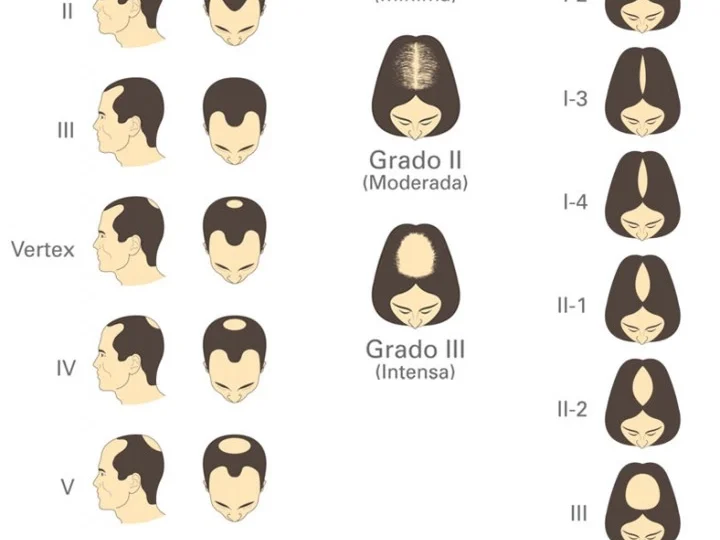

Types of alopecia: how to tell what type of hair loss you have
October 20, 2026 · By Dr. Evelyn Alfonso

Not all hair loss is the same. Before thinking about a treatment, let alone a transplant, it is key to know what type of alopecia you have, because each one has different causes, progression and solutions.
It is very common to arrive at a consultation with a self-made diagnosis: “it is genetic, my dad was bald”, “it is stress”, “it is the shampoo”. Sometimes people get it right, but often they do not, and that has consequences. Treating an autoimmune alopecia as if it were hereditary, or considering a transplant when the hair loss is temporary, means losing time and, in some cases, letting a problem that did have a solution progress. In this article we explain the most common types of alopecia, how to recognize them and the path each one usually follows.
First: how hair grows
To understand why hair falls out, it helps to know that each follicle works in cycles. There is a long growth phase (anagen), a short transition phase (catagen) and a resting phase (telogen), at the end of which the hair is shed and the follicle starts a new cycle. That is why it is normal to lose some hairs every day: they are hairs that have completed their cycle and will be replaced.
The different types of alopecia disrupt this process in different ways. Some shorten the growth phase and make hair grow in thinner and thinner; others push many follicles into the resting phase at the same time; others directly attack or damage the follicle. Understanding which of these mechanisms is at work is the basis of the diagnosis. If you are unsure whether what you have is normal, it may help to read normal hair shedding or alopecia.
Androgenetic alopecia
It is the most common type in men and women. It is caused by a genetic sensitivity of the follicles to androgen hormones, which gradually miniaturize them: the hair grows in thinner and shorter until it stops growing.
- In men it usually starts at the temples and the crown.
- In women it shows up as diffuse loss of density on top, with the part getting wider and wider.
- It is progressive: if left untreated, it keeps advancing.
It is the type of alopecia in which an FUE hair transplant gives the best results, as long as the donor area is sufficient.
An important detail: in androgenetic alopecia, the hair at the back and sides of the head is usually resistant to that hormonal effect. That is precisely why it is used as the donor area and why transplanted hair tends to last over time, as we explain in does a hair transplant fall out?. At the same time, native hair that is not transplanted may continue to thin, which is why the plan often combines surgery with maintenance medical treatment.
The typical signs are a gradual change, not an overnight one: receding temples, a crown that shows through in the light, hair that loses body or a bun that feels thinner every year. If you want to recognize your pattern, see alopecia patterns: where you lose hair and, if yours starts at the top back of the head, hair loss at the crown. In women the pattern is different and deserves a closer look of its own: we explain it in alopecia in women.
Alopecia areata
It is autoimmune in origin: the body’s own defense system attacks the follicles. It appears as round, smooth bald patches, sometimes in the beard or eyebrows. Hair can grow back on its own or with medical treatment, and in its active phase it is not an indication for a transplant.
Alopecia areata can appear at any age and its course is hard to predict: some people have a single episode and others have flare-ups over the years. The skin in the affected area usually looks normal, without scarring, because the follicle is not destroyed but rather “on pause”. That is why there is a chance the hair will grow back.
The reason it is not transplanted in the active phase is simple: if the immune system keeps attacking the follicles, it could also affect the grafts. Management is medical and must be prescribed by a professional, according to the extent and activity of the disease.
Telogen effluvium
It is diffuse, sudden shedding that appears about 2 to 3 months after an event that “stresses” the body: high fever, surgery, childbirth, a strict diet, iron deficiency or a period of intense stress. It is usually temporary and the hair recovers once the cause is corrected.
What is scary about effluvium is the amount: you notice a lot of hair on your pillow, in your brush or in the shower drain, and that causes a lot of distress. But the delay of months between the event and the shedding means many people do not connect the two. If this happens to you, think about what happened in your life a few months earlier. We tell you more in hair in the shower: when to worry.
Keep in mind that effluvium can “unmask” androgenetic alopecia that had been progressing silently. When the shedding stops but the density does not fully recover, it is worth evaluating whether there is something more underneath.
Traction alopecia
It is caused by hairstyles that pull on the hair for long periods: tight ponytails, braids or extensions. In early stages it is reversible if the traction is removed; if it continues for years, the damage can become permanent.
It is usually noticed along the edge of the forehead and at the temples, which is where the hair receives the most tension. Changing your hairstyle, alternating the position of your ponytail, avoiding sleeping with your hair pulled tight and taking breaks between extensions are simple measures that help a lot when applied in time.
Scarring alopecias
They are less common, and in them the follicle is destroyed and replaced by scar tissue. They require early diagnosis and medical treatment to stop them from progressing.
Unlike other alopecias, here the lost hair does not grow back, so the main goal is to stop the progression. They are sometimes accompanied by itching, burning, redness or flaking around the hairs. In these cases a scalp biopsy may be needed to confirm the diagnosis. Only when the disease has been stable for a long time, and always on medical advice, could surgery be considered.
How do you know which one you have?
The diagnosis is made with a medical evaluation: medical history, scalp examination with digital trichoscopy and, if appropriate, blood tests. We give you the details in Trichological evaluation: what tests we perform.
Depending on the result, the path may be medical treatment, our non-surgical Hair Protocol or a hair transplant.
What is reviewed in an evaluation
- Your history: when you started noticing the hair loss, whether it was gradual or sudden, family history, illnesses, medications, pregnancies, weight changes and stress.
- The pattern: where the loss is concentrated (temples, crown, part, patches, edges) and how it has changed over time.
- The scalp: with AI-assisted trichoscopy we look at hair thickness, miniaturization and signs of inflammation that cannot be seen with the naked eye.
- Additional tests: when the case calls for it, blood tests to rule out factors such as iron deficiency or hormonal changes.
One person, more than one type
It is not unusual for two processes to coexist: for example, underlying androgenetic alopecia and effluvium after a difficult period. That is why the diagnosis is not based only on a photo or on how your head looks on any given day, but on your whole history and the examination.
Practical tips while you seek a consultation
- Take photos of your head with the same lighting and the same angle every month. They are very useful for seeing the real progression, beyond your impression of the day.
- Write down dates: when the hair loss started and what happened in the months before (illnesses, surgeries, diets, medication changes).
- Do not self-medicate with products you saw on social media. Hair loss treatments should be prescribed by a doctor, according to the type of alopecia.
- Be careful with your hairstyle: avoid strong traction and excessive heat while you find out what is going on.
- Bring your recent test results if you have them; they help refine the diagnosis.
Common myths about hair loss
“If I am losing a lot of hair, I am going to go bald”
Not necessarily. Heavy, sudden shedding is often effluvium, which is usually temporary. What is most concerning in androgenetic alopecia is not how much hair falls out in a day, but that the hair that grows in is thinner and thinner.
“Wearing a hat or washing your hair often causes baldness”
Washing your hair does not cause alopecia: the hairs that come out in the shower were already about to fall. Wearing a hat does not cause baldness either, unless it creates constant traction or friction.
“Alopecia only comes from your mother’s side of the family”
The inheritance of androgenetic alopecia is complex and can come from both sides of the family. Family history helps guide the evaluation, but it does not replace it.
“All alopecias can be solved with a transplant”
No. A transplant has a specific indication, mainly stable androgenetic alopecia with a sufficient donor area. In active alopecia areata, effluvium or active scarring alopecias, surgery is not the right choice.
When to see a doctor without waiting
- If bald patches appear suddenly, on the scalp, beard or eyebrows.
- If the hair loss comes with intense itching, pain, burning, scabs or redness.
- If you lose a lot of hair for more than a few months without a clear cause.
- If you notice your density gradually decreasing, especially if you are young.
- If, in addition to hair loss, you have other symptoms, such as marked fatigue, weight changes or menstrual changes.
Seeing a doctor early does not just bring peace of mind: in many alopecias, the sooner you act, the more hair you can keep.
Frequently asked questions
Can androgenetic alopecia be stopped?
It is a progressive condition, but there are medical treatments that can help slow its progression and preserve existing hair. The response varies from person to person, and treatment should be prescribed and monitored by a doctor.
Can stress cause alopecia?
A period of intense stress can trigger telogen effluvium, which appears months later and is usually temporary. It is also associated with alopecia areata flare-ups in some people. Ideally, other causes besides stress should be evaluated.
Can women have androgenetic alopecia?
Yes. In women it usually appears as loss of density on top, with the part getting wider and wider, rather than as pronounced receding temples. It has its own approach to diagnosis and treatment; you can read more in female alopecia.
Can I get a transplant if I have alopecia areata?
In the active phase it is not an indication for a transplant, because the disease could affect the grafts. Initial management is medical, and any other option must be evaluated case by case with the specialist.
How many hairs a day is it normal to lose?
Losing some hairs every day is part of the normal cycle. Rather than counting hairs, it is better to look at whether the shedding is much greater than usual, whether it lasts for months or whether you notice areas with less density.
What type of alopecia is treated with the Hair Protocol?
The Hair Protocol is a non-surgical alternative that is recommended based on each patient’s diagnosis. The evaluation determines whether it is suitable for your case, alone or combined with other treatments. You can also see how to improve hair density without a transplant.
In summary
There are several types of alopecia and each has a different cause and path: androgenetic alopecia is progressive and is the one that responds best to a transplant; alopecia areata is autoimmune and is not operated on in its active phase; effluvium is usually temporary; traction alopecia is reversible if you act in time; and scarring alopecias require early treatment. The most important thing is to have a correct diagnosis before deciding. At Clínica Lumos, Dr. Evelyn Alfonso evaluates you personally to determine what you have and which options are realistic in your case. Book your hair evaluation.
This information is educational and does not replace a medical evaluation. Results vary from patient to patient.
Hair Transplant and Liposuction in Viña del Mar, Valparaíso
Keep reading
Most read
RELATED POSTS
View all

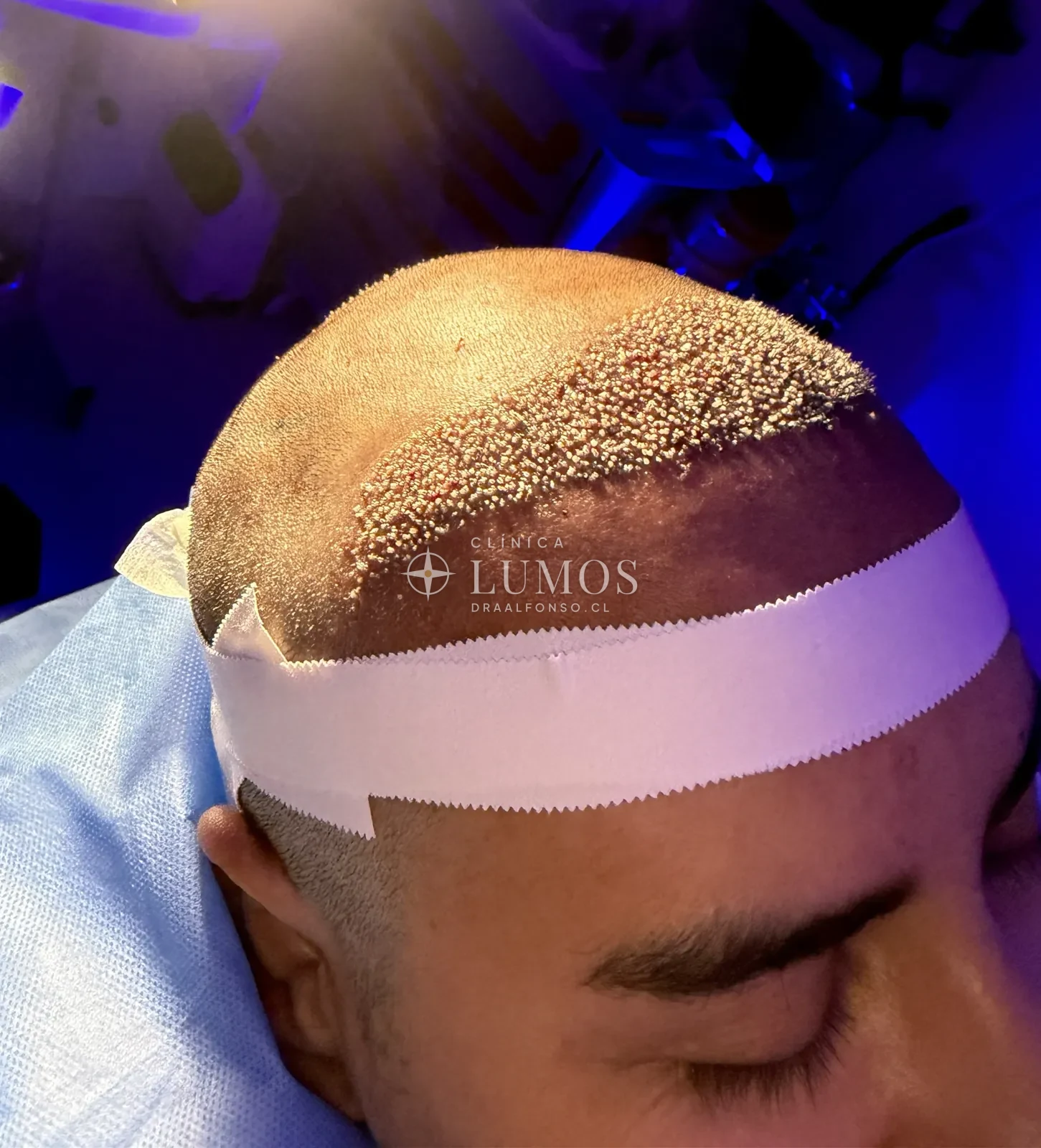
Follicles vs. Hairs: How to Compare Hair Transplant Quotes Without Falling for Inflated Numbers
October 24, 2026 | by Dra. Evelyn Alfonso

Over 200 patients a month: how we work at Clínica Lumos
October 16, 2026 | by Dra. Evelyn Alfonso
Comments (0)
No comments yet. Be the first to ask!