

Normal hair shedding or alopecia? When to worry
October 22, 2026 | by Dra. Evelyn Alfonso

Normal hair shedding or alopecia? When to worry
October 22, 2026 · By Dr. Evelyn Alfonso
Seeing hair on your pillow, in the drain or in your brush is scary. But losing some hair every day is part of the normal follicle cycle. The question is: when does it stop being normal?
How much hair is normal to lose?
Each follicle goes through phases of growth, rest and shedding. That is why it is common to lose between 50 and 100 hairs a day, which are replaced by new hairs. On wash days it may seem like more because hairs from previous days build up.
Normal shedding or alopecia: the key differences
Rather than the exact number of hairs, what helps distinguish normal shedding from a problem is looking at the whole picture:
- Duration: normal or seasonal shedding is short-lived and settles down; the worrying kind persists over time or keeps coming back.
- Density: with normal shedding, the volume and the way your hair looks do not change; with alopecia, thinner areas appear.
- Thickness: if the hair that grows in comes out thinner and thinner, there may be miniaturization, typical of androgenetic alopecia.
- Distribution: even shedding all over the head points to certain causes; the temples, crown or part, to others; patches, to different ones.
- Symptoms: intense itching, pain, burning or flaking suggest that the scalp also needs attention.
If you are still not sure, you can also read is it normal to see hair in the shower?
Seasonal shedding
Many people notice heavier shedding at certain times of the year, especially in autumn. It usually lasts a few weeks and then settles down without leaving areas of reduced density.
The most common causes of hair loss
Telogen effluvium: the shedding that is scary but usually passes
This is diffuse shedding all over the head that appears when many follicles enter the resting phase at the same time. It usually shows up a few weeks or months after an event that “stresses” the body: an illness with fever, surgery, childbirth, a very strict diet, rapid weight loss or a period of intense stress. Because of the delay, many people do not connect the shedding with its cause. It is generally temporary, although volume takes months to recover. If it lasts, factors that keep it going need to be investigated.
Androgenetic alopecia: the hair loss that progresses little by little
It is the most common form of alopecia, in both men and women. It has a genetic and hormonal component, and it does not always show up as noticeable shedding: often what people notice is that their hair is gradually thinning. In men it mainly affects the temples and the crown; in women a widening part is more common. Check out the alopecia patterns and, if you are a woman, alopecia in women.
Other causes
- Nutritional deficiencies or hormonal changes, such as iron deficiency or thyroid problems, which are investigated with tests ordered by a doctor.
- Alopecia areata, which causes bald patches, sometimes appearing quickly.
- Traction alopecia, from habitually wearing very tight hairstyles.
- Alopecias with scalp inflammation, which can leave scarring and require prompt evaluation.
- Some medications. Never stop a treatment on your own; talk to your doctor about it.
Warning signs
You should see a doctor if you notice any of these signs:
- The increased shedding lasts more than 2 to 3 months.
- Your temples are receding or your crown looks thinner.
- Your part looks wider or your scalp is more visible.
- Round or irregular bald patches appear.
- There is itching, redness, flaking or pain on the scalp.
- New hair grows in thinner and thinner.
- There is a family history of alopecia and you notice changes.
Why see a doctor early?
In androgenetic alopecia, the follicles gradually miniaturize. While they are still active, medical treatment and the Hair Protocol can slow hair loss and improve density. Once the follicle has been lost, the only way to recover hair in that area is a hair transplant.
What type of hair loss do I have?
We explain the differences in Types of alopecia: how to tell what type of hair loss you have. But an accurate diagnosis comes from an evaluation with trichoscopy.
Hair loss at different stages of life
- Youth: in some men the temples start to recede early. If there is a family history, it is worth getting evaluated soon, because that is when there are the most active follicles to protect.
- After childbirth: many women notice heavy shedding a few months after having their baby. It is usually temporary, although if it lasts it is a good idea to rule out other causes.
- Hormonal changes and menopause: these can make female androgenetic alopecia more visible, with loss of density on top and along the part.
- Older adulthood: some loss of density and thickness is expected with age, but not all hair loss is “due to age” and some causes are treatable.
When to see a doctor without waiting
There are situations in which it is not a good idea to wait and see if the shedding goes away on its own:
- You are losing hair suddenly and in clumps.
- Bald patches appear overnight.
- Your scalp hurts, burns, has scabs or the skin looks shiny in the bald areas.
- The hair loss comes with other symptoms, such as marked fatigue, unexplained weight changes or menstrual changes.
In these cases, a prompt medical evaluation helps find the cause and treat it in time.
What you can do in the meantime
- Look at the trend, not day to day: one morning with more hair on your pillow does not mean anything. Watch whether the shedding continues for weeks.
- Take reference photos of your part, temples and crown, with the same lighting and the same angle.
- Go over the last few months: write down illnesses, surgeries, childbirth, diet changes, stress or new medications. That information is very useful during the consultation.
- Take care of your scalp: lukewarm water, a gentle shampoo, little heat from the hair dryer and flat iron, and hairstyles that do not pull. If you are concerned about water temperature, read does hot water make your hair fall out?
- Eat a varied diet and avoid extreme diets.
- Do not self-medicate: lotions, supplements or drugs for hair loss should be prescribed by a doctor based on the cause.
What a hair evaluation is like
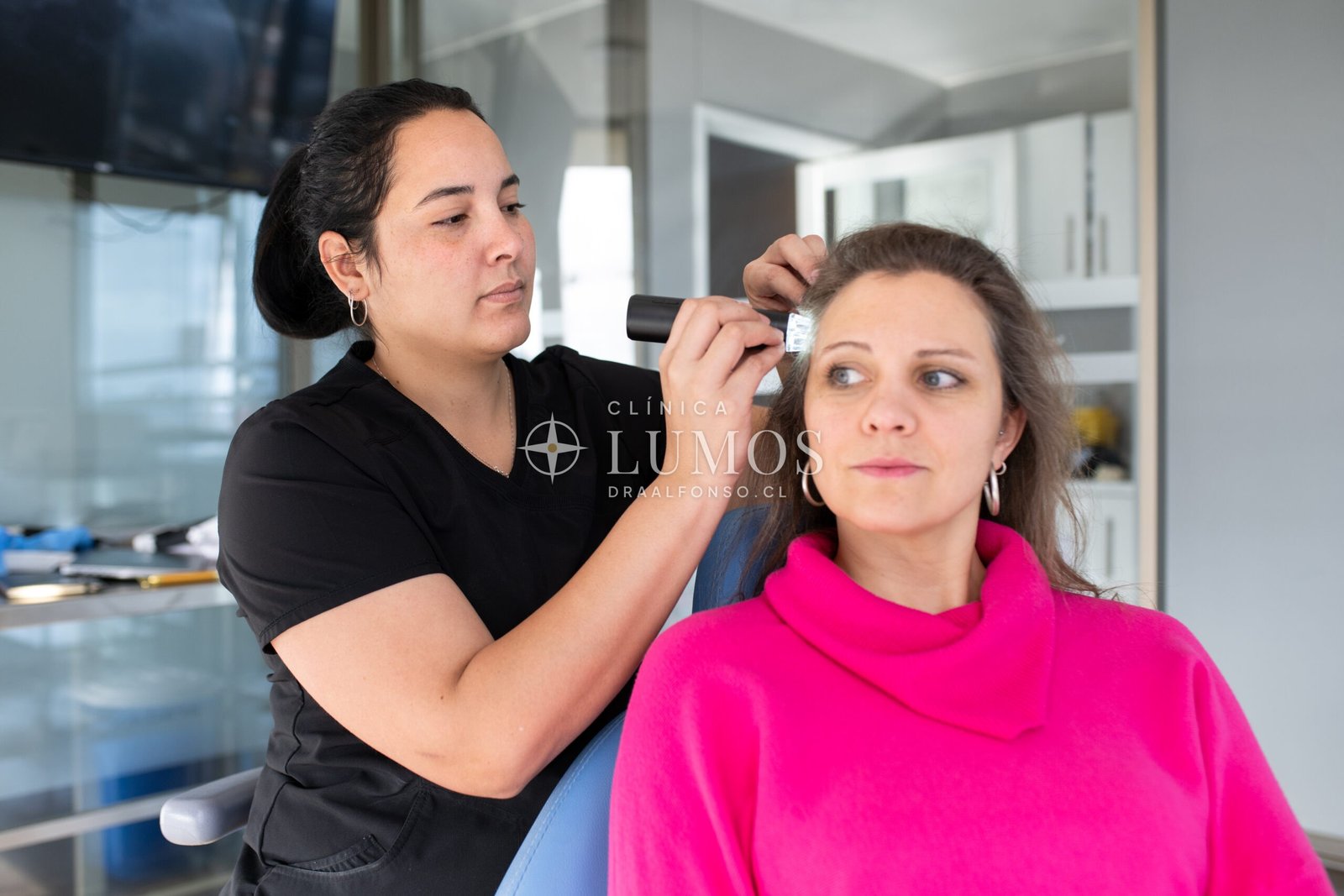
At Clínica Lumos, Dr. Evelyn Alfonso evaluates you personally. The consultation starts with your history: when you started noticing the shedding, how it has changed, your family history and what you have tried. Then your scalp is examined with AI-assisted trichoscopy, which makes it possible to measure density, hair thickness and miniaturization, something that cannot be determined accurately with the naked eye.
Depending on the findings, tests may be ordered to rule out treatable causes. With all of that, a diagnosis and a plan are defined: sometimes it is enough to correct the cause and wait; other times medical treatment or a Hair Protocol is advisable; and in some cases, when there are areas where the follicle can no longer recover, the option of a transplant is discussed.
Hair loss myths
“If I wash less, I will lose less hair”
Washing less only makes the hairs that were already about to fall build up and come out together in the next wash.
“Cutting your hair makes it grow back stronger”
Cutting your hair can make it look neater and fuller, but it does not change what happens in the follicle.
“Hair loss is always due to stress”
Stress can trigger telogen effluvium, but it is not the only cause. Blaming everything on stress can delay the diagnosis of androgenetic alopecia or another condition.
“If it is autumn shedding, there is never anything to worry about”
Seasonal shedding does exist and usually settles down, but if it lasts longer than expected or leaves thinner areas, it is no longer just seasonal.
Frequently asked questions
How many hairs is it normal to lose per day?
It is common to lose between 50 and 100 hairs a day. On wash days it may seem like more.
How long does telogen effluvium last?
It is usually temporary, but how long it lasts varies depending on the cause and the person. If the increased shedding continues for more than 2 to 3 months, you should see a doctor.
Is hair loss after childbirth normal?
It is common to notice more shedding a few months after giving birth, and it generally recovers. If it lasts or you notice thinner areas, see a doctor.
What tests are ordered for hair loss?
It depends on your case. The doctor decides whether blood tests are needed, for example to check iron or thyroid, based on the findings of the evaluation.
Can hair that has fallen out be recovered?
If the follicle is still active, often yes. In advanced androgenetic alopecia, once the follicle has been lost, the way to recover hair in that area is a hair transplant.
Can I wait and see if it goes away?
If the shedding is mild and recent, it is sometimes reasonable to watch it for a few weeks. But if there are warning signs, a family history or the shedding continues, waiting too long can mean losing follicles that could still have been saved. When in doubt, seeing a doctor is the option that brings the most peace of mind.
In summary
Losing hair every day is normal, and seasonal shedding usually goes away on its own. What is not normal is shedding that continues for months, hair that keeps getting thinner, a wider part, thinner temples or crown, or bald patches. If you notice these signs, it is best to see a doctor early: while the follicle is still active, there are more alternatives. If you want to put your mind at ease, book your evaluation with Dr. Evelyn Alfonso in Viña del Mar.
This information is educational and does not replace a medical evaluation. Results vary from patient to patient.
Hair Transplant and Liposuction in Viña del Mar, Valparaíso
Keep reading
Most read
RELATED POSTS
View all


Alopecia in women: causes, signs and treatment options
October 22, 2026 | by Dra. Evelyn Alfonso

Correcting a hair transplant done at another clinic
October 23, 2026 | by Dra. Evelyn Alfonso
Can hair density be improved without a transplant?
October 23, 2026 | by Dra. Evelyn Alfonso
Comments (0)
No comments yet. Be the first to ask!