

Where does Chile rank in the world baldness ranking?
October 23, 2026 | by Dra. Evelyn Alfonso

Where does Chile rank in the world baldness ranking?
October 23, 2026 · By Dr. Evelyn Alfonso

Have you ever wondered which countries top the world ranking for male pattern baldness? It is not a myth: baldness is very common in the Western world, and Chile has its own place on the list. Dr. Evelyn Alfonso explains it in this video:
The countries with the most baldness in the world
According to the ranking published in 2024 by the Medihair platform, the top three spots are held by European countries, with more than 44% of their male population affected by baldness:
- Spain: 44.50%
- Italy: 44.37%
- France: 44.25%
Where is Chile?
Chile appears in 28th place worldwide, with 34.07% of men experiencing baldness. That makes it the third country in Latin America in the ranking, after Mexico (14th place) and Brazil (22nd place).
In other words: roughly one in three men in Chile has some degree of baldness. It is a very common problem, and you do not have to go through it alone.
Why does hair fall out?
In androgenetic alopecia, the most common form of male baldness, the two main causes are:
- Genetic inheritance: family predisposition determines how sensitive your follicles are.
- Dihydrotestosterone (DHT): a hormone derived from testosterone that progressively weakens sensitive follicles.
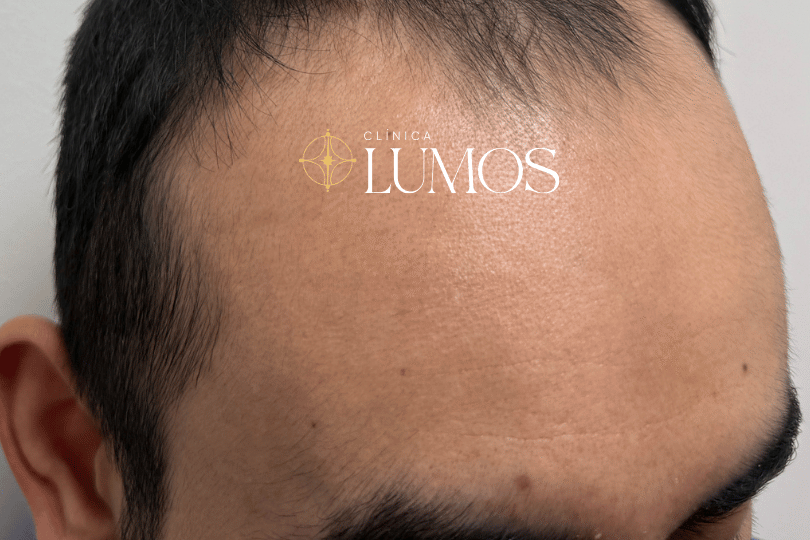
Over time, this causes hair to become thinner (miniaturization) and the area to lose density, especially at the temples and the crown. Learn more about the types of alopecia.
Why some countries have more baldness than others
The differences between countries are not because people in one place take better care of their hair than in another. Androgenetic alopecia has a very important hereditary component, and how common that predisposition is varies between populations depending on their origin. That is why rankings tend to show higher figures in countries with populations of European descent, and differences between regions of the world.
These rankings should also be read with caution. Each study uses its own methodology: how “baldness” is defined, which ages are included and where the data come from. That is why the figures can vary depending on the source. What is consistent is the underlying message: male baldness is very common, and that is also true in Chile.
How androgenetic alopecia progresses
Androgenetic alopecia does not appear overnight. It usually progresses gradually, over years, and follows fairly recognizable patterns in men:
- Temples: the front hairline recedes at the temples, forming an “M” shape.
- Crown: a thinner area appears at the top and back of the head, often noticed first in photos or under direct light.
- Top of the head: over time, the temples and the crown can merge, leaving the top of the head bare.
- Donor area: the sides and the back of the head usually keep their hair, because those follicles are more resistant to the action of DHT. That is the basis of hair transplantation.
The pace is different for each person: some notice changes from a very young age, while others keep good density for a long time. If you want to see the patterns in detail, read alopecia patterns: where you lose hair and hair loss at the crown.
Early signs worth paying attention to
- Your temples look deeper than in photos from a few years ago.
- The hair on top looks thinner and has less volume.
- Your scalp shows through under direct light or when your hair is wet.
- You notice more shedding than usual for several weeks.
- You have a family history of baldness and are starting to notice changes.
Seeing hair in the shower does not always mean alopecia. If you are unsure, check out normal hair shedding or alopecia?
Baldness myths
“Wearing a hat or cap makes you bald”
No. A regular hat does not damage the follicle. Androgenetic alopecia depends on genetics and hormones.
“Baldness is inherited only from your mother’s side of the family”
The predisposition can come from both sides of the family. Having a family history is a sign to stay alert, but it does not allow you to predict exactly how your case will progress.
“Washing your hair with hot water causes baldness”
Hot water can dry out the scalp, but it does not cause alopecia. We explain it in does hot water make your hair fall out?
“If you are bald, there is nothing to be done”
Today there are medical treatments that can help slow hair loss in many cases, and a hair transplant is an alternative when the follicles can no longer recover. What matters is the diagnosis.
The good news: there are solutions today
Science is advancing, and today there are real treatments to slow hair loss and recover hair. The important thing is to start with a correct diagnosis, because every case is different:
- AI-assisted trichoscopy: measures the density, thickness and miniaturization of your hair.
- Hair Protocol: a non-surgical treatment to strengthen the follicles that are still active and slow hair loss.
- FUE hair transplant: when the follicles in the area can no longer be recovered, healthy follicles from the donor area are reimplanted, also without shaving.
At Clínica Lumos, in Viña del Mar, Dr. Alfonso evaluates your case and recommends the right treatment. We see patients from all over the Valparaíso Region, Santiago and other regions.
What you can do today if you notice your hair falling out
- Take reference photos: temples, top and crown, with the same lighting. In a few months you will be able to compare with data and not just impressions.
- Ask your family: knowing how baldness progressed in your father, grandparents or uncles gives you a clue, although it does not define your case.
- Be wary of miracle solutions: lotions, shampoos or supplements that promise to bring back all your hair in weeks usually lead to expense and frustration.
- Do not self-medicate: alopecia treatments should be prescribed by a doctor, who assesses whether they are right for you and follows up.
- Take care of your general health: sleeping well, eating a varied diet and not smoking will not stop genetic alopecia, but they do help keep your scalp and hair in better condition.
- See a doctor early: the more active follicles you keep, the more alternatives you will have.
Baldness and self-esteem
The fact that baldness is common does not mean it does not matter. Many men say that losing hair affected their confidence, how they look in photos or even how they relate to others. It is a valid concern. It is also true that not everyone needs or wants treatment, and that decision is personal. What is worthwhile is deciding with information: knowing what type of alopecia you have, how it could progress and what options exist lets you choose calmly, without pressure and with realistic expectations.
What the evaluation looks like, step by step
- 1. Conversation: Dr. Evelyn Alfonso evaluates you personally and reviews with you when the hair loss started, your family history and the treatments you have tried.
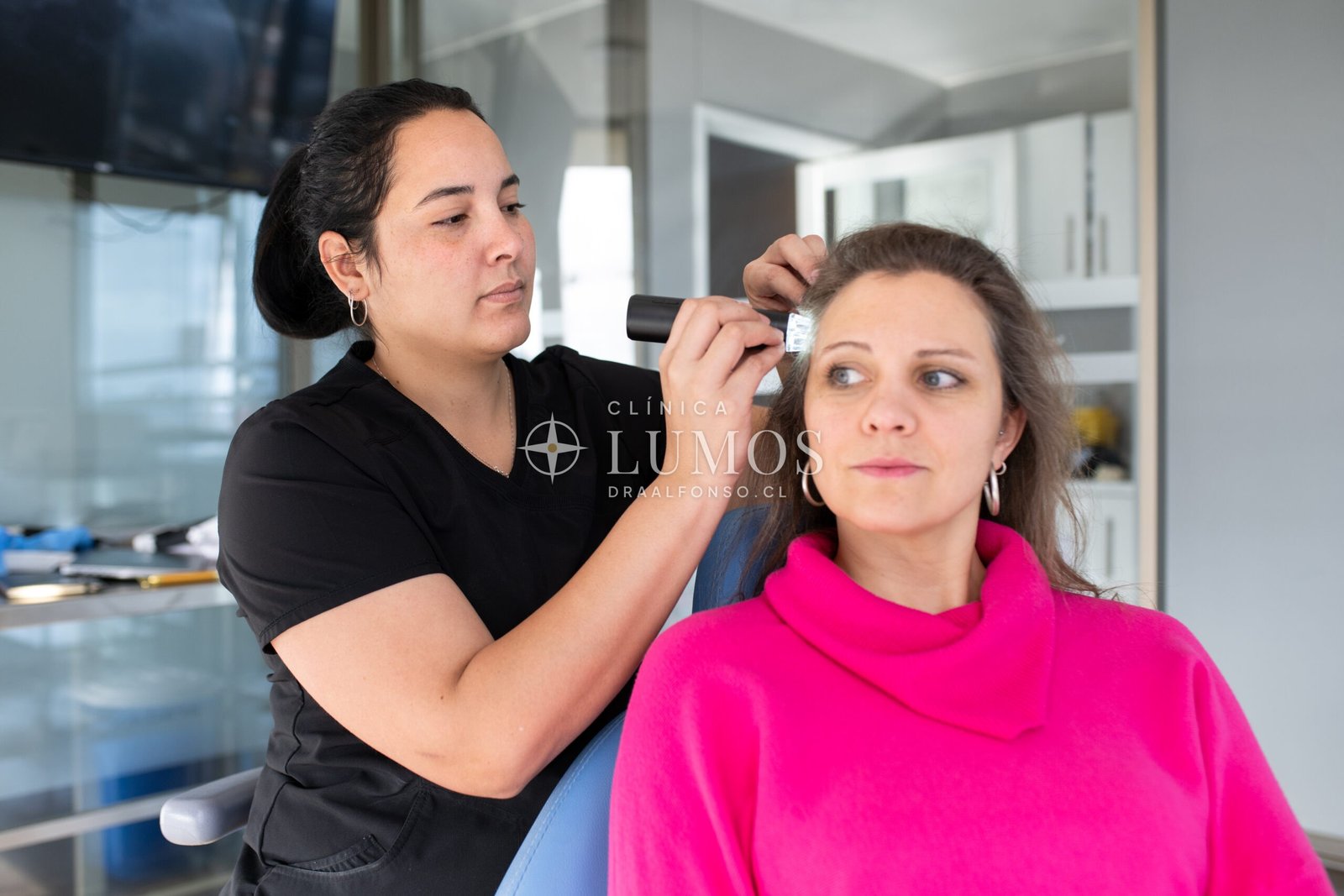
- 2. Trichoscopy: density, thickness and miniaturization are measured to know what stage you are at and which areas are most affected.
- 3. Diagnosis and plan: she explains what type of alopecia you have and what alternatives exist, from medical treatment to a transplant if appropriate.
- 4. Follow-up: androgenetic alopecia is progressive, so monitoring over time is part of the plan.
If you are considering a transplant, you may also want to know at what age it makes sense to get a hair transplant and whether a hair transplant is long-lasting. You can see real cases in our patient before and after photos.
Frequently asked questions
Is baldness just a cosmetic issue?
Androgenetic alopecia is not usually a health risk, but it can greatly affect confidence and mood. In addition, some hair loss has medical causes that should be ruled out, which is why getting evaluated is important.
Do women also get androgenetic alopecia?
Yes. In women it usually shows up as a widening part and diffuse loss of density. Read more in alopecia in women.
Can baldness be stopped?
In many cases it can be slowed or improved with medical treatment prescribed by a doctor, especially if started early. Results vary from person to person.
When is a hair transplant a good idea?
When there are areas where the follicles can no longer be recovered, the hair loss is relatively stable and you have a suitable donor area. That is determined during the evaluation.
Do I need to live in Viña del Mar to be treated?
No. Clínica Lumos is in Viña del Mar, about 1 hour 30 minutes from Santiago, and welcomes patients from different regions.
Does stress cause baldness?
Intense stress can trigger telogen effluvium, a diffuse shedding that usually appears a few months later and is often temporary. It is not the same as androgenetic alopecia, although both can coexist and make the loss more noticeable. That is why it helps to have a doctor determine what is happening in your case.
In summary
Baldness is very common worldwide and also in Chile. It is mainly explained by genetics and the action of DHT, it progresses gradually and today there are treatment alternatives. The most important thing is not to wait until it advances too far and to start with a diagnosis. If you notice changes in your hair, book your evaluation with Dr. Evelyn Alfonso at Clínica Lumos.
Ranking source: Medihair study (2024), reported by Chilevisión. The figures are estimates from the platform and may vary depending on the source. This information is educational and does not replace a medical evaluation.
Hair Transplant and Liposuction in Viña del Mar, Valparaíso
Keep reading
Most read
RELATED POSTS
View all


How Much Does a Hair Transplant Cost in Chile? What Affects the Price
October 23, 2026 | by Dra. Evelyn Alfonso

Eyebrow implant without shaving: the Lumos Technique
October 23, 2026 | by Dra. Evelyn Alfonso
Seeing hair in the shower or bathroom? What to do if your hair is falling out
October 23, 2026 | by Dra. Evelyn Alfonso
Comments (0)
No comments yet. Be the first to ask!