

Alopecia in women: causes, signs and treatment options
October 22, 2026 | by Dra. Evelyn Alfonso

Alopecia in women: causes, signs and treatment options
October 22, 2026 · By Dr. Evelyn Alfonso

Alopecia is not just a male issue. Many women notice that their hair is thinner, that their part looks wider or that they are losing more hair than before, and they do not always know who to see.
How does it show up?
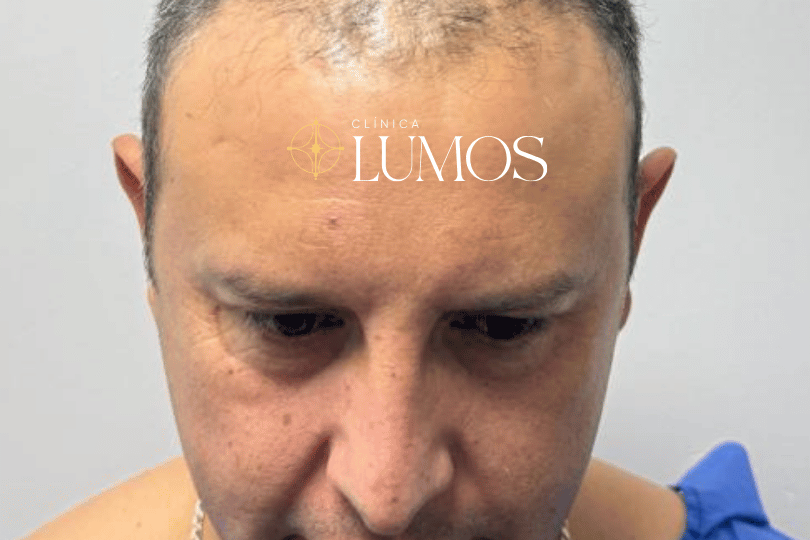
Unlike in men, in women female androgenetic alopecia usually preserves the front hairline and causes diffuse loss of density on the top of the head. The first sign is usually a wider part or seeing more scalp under certain lighting.
Early signs worth paying attention to
- Your part looks wider than in old photos.
- Your scalp is more visible under direct light, in the car or in photos with flash.
- Your ponytail or bun feels thinner.
- The hair on top is thinner and has less volume than the hair on the sides or at the back of the head.
- You see more hair than usual in the shower, in your brush or on your pillow for weeks.
- It is harder to style your hair to hide areas with less density.
Many women notice these changes for a long time before seeing a doctor, partly because hair loss is thought to be “a man thing” or something that can be fixed by changing shampoo. The earlier you are evaluated, the easier it is to care for the hair that is still active.
Why it is different in women
In men, androgenetic alopecia usually progresses at the temples and the crown. In women, on the other hand, the front hairline is more often preserved and the loss is diffuse, especially on the top of the head. That is why it is sometimes hard to notice: there is no obvious bald area, just hair that looks thinner overall. In addition, it is more common in women for several causes to coexist, for example a hormonal component together with iron deficiency or stress-related effluvium. That makes the diagnosis especially important. If you want to see how the patterns differ, read alopecia patterns: where you lose hair.
Most common causes
- Genetic and hormonal factors, which can become more pronounced with menopause.
- Thyroid disorders.
- Iron or other nutrient deficiencies, common in women.
- Postpartum effluvium: heavy shedding a few months after childbirth, usually temporary.
- Polycystic ovary syndrome and other hormonal changes.
- Stress, restrictive diets or recent illnesses.
Temporary shedding or alopecia: how to tell them apart
Not all hair loss in women is androgenetic alopecia. Telogen effluvium, for example after childbirth, an illness, surgery or a period of high stress, causes heavy, sudden shedding all over the head that is usually temporary. Female androgenetic alopecia, on the other hand, progresses slowly, and what is most noticeable is the loss of thickness and density rather than the number of hairs in the shower. Both can occur together. To get your bearings, check out normal hair shedding or alopecia? and the types of alopecia.
The emotional impact matters too
For many women, hair loss is not a minor cosmetic detail: it affects how they look, how they style their hair and even whether they feel like going out or appearing in photos. It is a valid concern and deserves to be taken seriously. Seeing a doctor is not overreacting; it is getting information so you can decide calmly what to do.
The first step: a diagnosis
Because the causes vary, the evaluation includes a medical history, trichoscopy and, often, blood tests. Treating the underlying cause is essential for any treatment to work.
What the evaluation at Clínica Lumos is like
- Conversation: Dr. Evelyn Alfonso evaluates you personally and reviews with you when the hair loss started, your cycles, pregnancies, hormonal changes, diets, recent illnesses and family history.
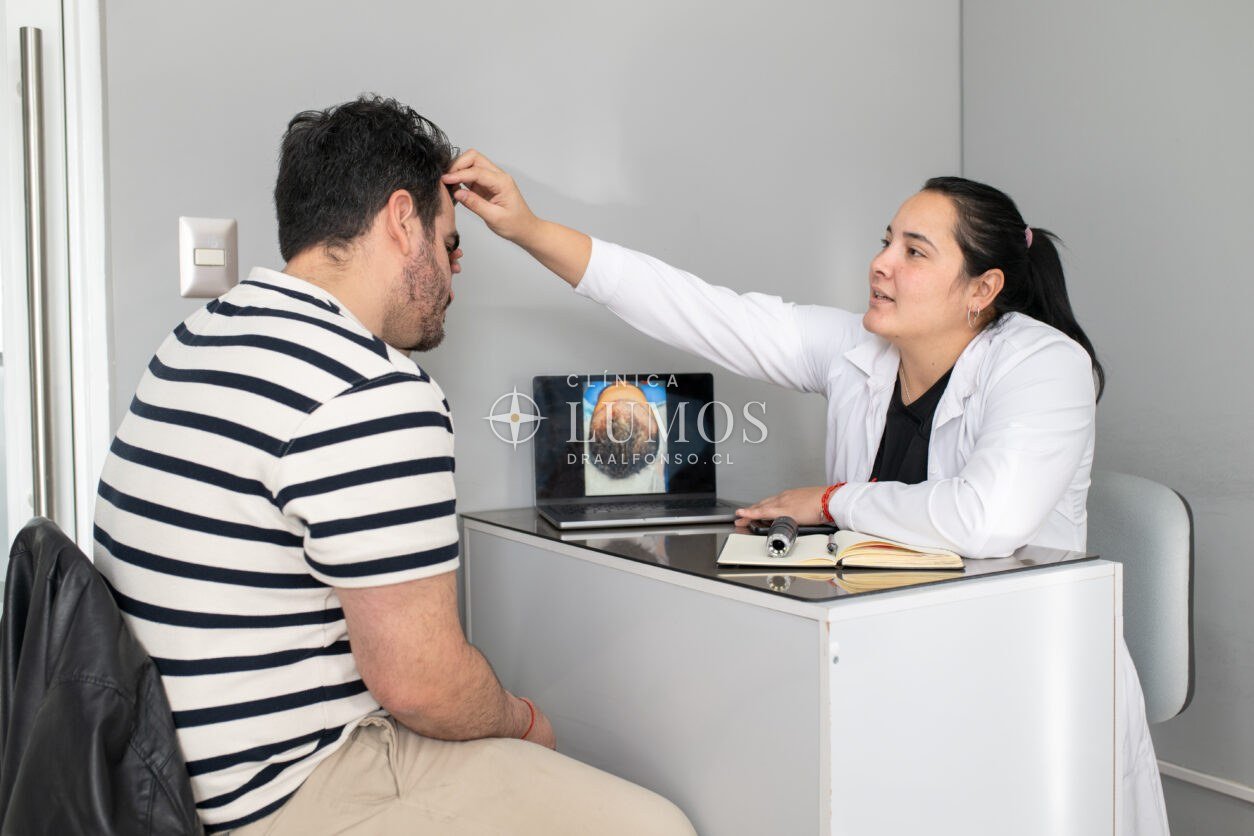
- Trichoscopy: AI-assisted trichoscopy measures density, hair thickness and miniaturization, and allows comparison at follow-up visits.
- Tests: if appropriate, tests are ordered to check for treatable causes, such as iron or thyroid.
- Plan: with the diagnosis, the treatment and follow-up are defined. If there is another underlying condition, it may be necessary to coordinate with other specialists.
Treatment options
Medical treatment and Hair Protocol
For many women the focus is on slowing hair loss and recovering density with medical treatment and our Hair Protocol, which combines follicular nutrition, growth factors and scalp stimulation.
Female hair transplant
In selected cases, with stable alopecia and a good donor area, a transplant using the FUE technique is possible without having to shave your hair, which lets you keep your usual appearance from day one.
Learn how we treat female alopecia and hair transplants in women at Clínica Lumos.
While the treatment takes effect
Since changes in hair take months, it is normal to look for ways to feel better in the meantime. Some simple alternatives:
- A cut designed to add volume: soft layers or a slightly shorter length can make hair look fuller.
- Switching your part to the other side or wearing it in a zigzag helps make the thinner area less noticeable.
- Lightweight styling products: very heavy ones weigh hair down and make it look thinner.
- Cosmetic concealing products, such as hair powders or fibers in your hair color, which temporarily cover the scalp. They do not treat hair loss, but they can give you confidence day to day.
- Avoid very tight extensions or wigs on a permanent basis, because constant traction and friction can make things worse. If you want to use them, mention it during your consultation.
What matters is that these measures go along with the diagnosis and treatment, not replace them.
Daily care that helps
Home care does not replace treatment, but it does help protect your hair while the cause is being treated:
- Hairstyles without tension: avoid very tight ponytails, buns or braids every day, and alternate the position of your part and your hair clips.
- Less heat: use the hair dryer on medium heat, and the flat iron with a heat protectant and not every day.
- Chemicals in moderation: frequent bleaching, straightening and dyeing weaken the hair fiber and make hair break.
- Gentle washing: lukewarm water and a shampoo suited to your scalp. Washing your hair does not make it fall out more.
- A varied diet: very restrictive diets can trigger hair loss. If you suspect a deficiency, do not self-supplement: ask to be evaluated.
- Patience with treatments: hair grows slowly, and any improvement is assessed in months, not weeks.
Myths about alopecia in women
“Women do not go bald, so it is not alopecia”
It is true that male-type baldness is uncommon in women, but diffuse loss of density is also alopecia and it can be treated.
“If I dye my hair, it will fall out”
Properly applied hair dye does not destroy the follicle. What can happen with aggressive, repeated chemical processes is that the hair breaks.
“Hair loss after childbirth leaves your hair like that forever”
Postpartum effluvium is usually temporary. If after a while your hair does not regain its volume, there may be another underlying cause that should be checked.
“Hair vitamins solve hair loss”
They only help if there is a deficiency, and that is confirmed with an evaluation. Taking them without a prescription does not treat the cause and is not always harmless.
When to see a doctor
- The increased shedding lasts more than a few weeks or keeps coming back.
- You notice your part widening or the hair on top getting thinner.
- Bald patches appear or the hair loss is sudden.
- There is itching, pain, burning or flaking on the scalp.
- The hair loss comes with changes in your cycles, acne, increased hair growth in other areas or marked fatigue.
Frequently asked questions
Can female alopecia be treated?
Yes. In many women, hair loss can be slowed and density improved with medical treatment and a Hair Protocol. Treatment should be prescribed by a doctor based on the cause, and results vary in each case.
Can women get a hair transplant?
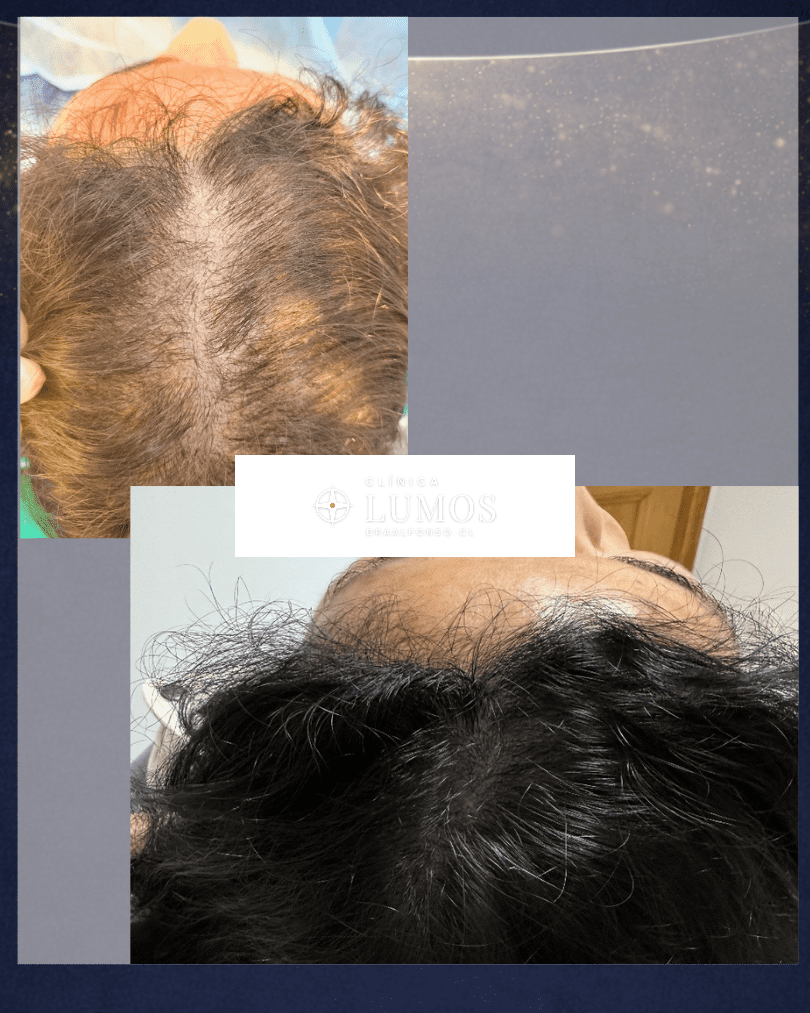
In selected cases, with stable alopecia and a good donor area, yes. At Clínica Lumos it can be performed using the FUE technique without shaving the hair. You can see an example in a female hair transplant case.
Does menopause make your hair fall out?
The hormonal changes of this stage can accentuate female androgenetic alopecia. Not all women experience it the same way, which is why each case should be evaluated.
What tests are ordered for hair loss in women?
It depends on your history and the evaluation. Treatable causes such as iron or thyroid are often checked, but the doctor determines which tests you need.
How long does it take to see improvement?
The hair cycle is slow, so changes are assessed over months. Trichoscopy at follow-up visits helps track progress with data.
In summary
Alopecia in women is more common than people think and usually shows up as a wider part and diffuse loss of density, not as obvious baldness. Its causes vary, from genetic and hormonal factors to deficiencies, postpartum changes or stress, and they are often combined. That is why the first step is a diagnosis. With treatment prescribed in time, there are more options to care for your hair. If this sounds like you, book your evaluation with Dr. Evelyn Alfonso in Viña del Mar.
This information is educational and does not replace a medical evaluation. Results vary from patient to patient.
Hair Transplant and Liposuction in Viña del Mar, Valparaíso
Keep reading
Most read
RELATED POSTS
View all

Female hair transplant: a case one year after the procedure
October 23, 2026 | by Dra. Evelyn Alfonso

Am I a candidate for a hair transplant? Signs, age and realistic expectations
October 16, 2026 | by Dra. Evelyn Alfonso
Comments (0)
No comments yet. Be the first to ask!