


FUE, FUSS (Strip) or No-Shave FUE: Hair Transplant Techniques Comparison Table
October 24, 2026 | by Dra. Evelyn Alfonso
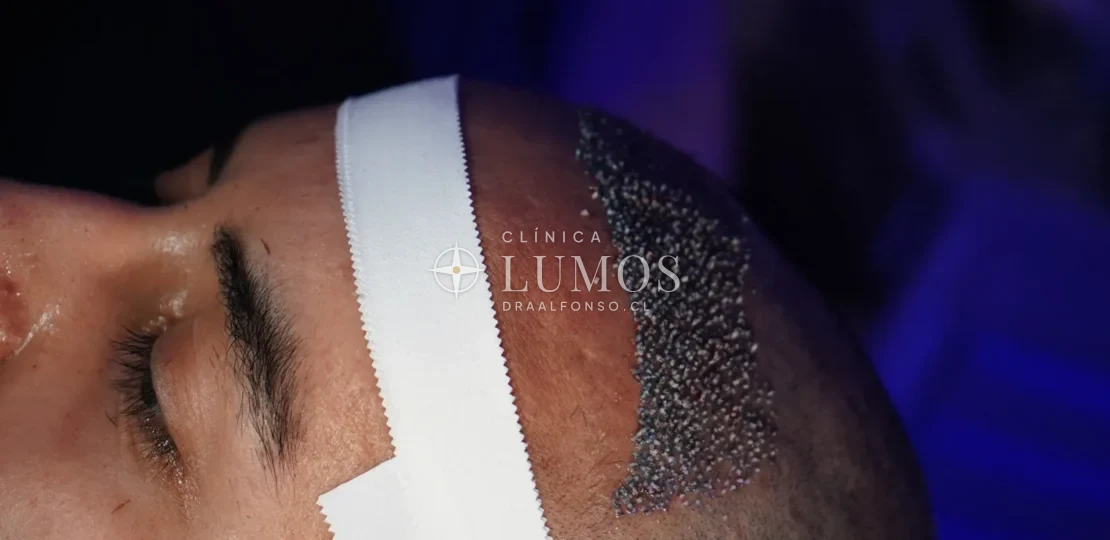
If you are researching a hair transplant, you have probably come across acronyms such as FUE, FUSS (also called FUT or the “strip technique”) and no-shave FUE. All three move follicular units from the donor area (back and sides of the head) to the areas with hair loss, but they differ in how those units are extracted, in the scar they leave and in the recovery.
In short: FUE extracts follicular units one by one and leaves no linear scar; FUSS removes a strip of skin and leaves a linear scar on the back of the head; no-shave FUE is a variant of FUE that avoids shaving the whole head so the procedure goes more unnoticed.
Comparison table: conventional FUE vs. FUSS vs. no-shave FUE
| Conventional FUE | FUSS / FUT (strip) | No-shave FUE | |
|---|---|---|---|
| How grafts are extracted | Unit by unit, with a micropunch | A strip of skin is removed from the back of the head and divided into units under a microscope | Unit by unit, without shaving the whole head |
| Donor area scarring | Very small, scattered dots that stay hidden by the hair | Linear scar on the back of the head | Very small, scattered dots |
| Stitches | No | Yes, in the donor area | No |
| Shaving | The donor area or the whole head is usually shaved | The donor area does not need to be shaved | The whole head is not shaved |
| Donor area discomfort | Generally mild | More tension and tenderness at the back of the head | Generally mild |
| Post-op discretion | Medium: the shaving is noticeable for the first few weeks | Medium: the scar is covered if the hair is worn long | High: existing hair conceals the procedure |
| Allows very short hair afterwards | Yes | With limitations, due to the linear scar | Yes |
| Who it is usually indicated for | Most patients with androgenetic alopecia | Selected cases, at the surgeon’s discretion | Patients who need to return quickly to work or social life without it being noticed |
Guide table. The right technique is defined at a medical evaluation based on your donor area, the degree of alopecia and your expectations.
Conventional FUE technique
FUE (Follicular Unit Extraction) involves extracting follicular units one by one with an instrument just a few millimeters wide and implanting them in the recipient area. Since no strip of skin is removed, it leaves no linear scar and requires no stitches. It is the technique performed by Dr. Evelyn Alfonso at Clínica Lumos. Learn more on our page on FUE hair transplant.
FUSS or FUT technique (strip)
In FUSS (Follicular Unit Strip Surgery), a strip of scalp is removed from the donor area, the wound is stitched and the strip is then divided into follicular units. Its main disadvantage is the linear scar on the back of the head and a more uncomfortable recovery of the donor area. Today most patients prefer FUE for these reasons.
No-shave FUE technique
No-shave FUE is the same FUE technique, but without shaving the whole head: the hair you already have conceals the procedure from day one. It is a more meticulous surgery, so it is not always possible to implant the same number of units in a single session; that is why evaluating each case is key. See all the details in no-shave hair transplant.
How the right technique for you is chosen
There is no “best” technique for everyone. The decision is made together with your doctor, considering several factors that are reviewed at the evaluation:
- Your donor area: its density, hair thickness and how many follicular units can be safely extracted without depleting it.
- The size of the area to be covered: working only on the hairline is not the same as working on the temples, mid-scalp and crown.
- How you like to wear your hair: if you usually wear it very short or shaved, a linear scar on the back of the head can become a cosmetic problem in the future.
- Your work and social life: if you need to return to your routine quickly without it being noticed, no-shave FUE may be an option to consider.
- Previous surgeries: if you have already had a transplant, the condition of your donor area and previous scars influence what can be done.
- Your expectations: it is important to discuss honestly what can and cannot be achieved, in terms of both density and timing.
At Clínica Lumos, Dr. Evelyn Alfonso works exclusively with the FUE technique, so at the evaluation she will explain whether conventional FUE is best in your case or whether it is feasible to do it without shaving. Before defining the plan, your scalp is analyzed with AI-assisted trichoscopy, which allows the donor area and hair miniaturization to be observed in more detail.
Common myths about hair transplant techniques
“FUE leaves no marks at all”
FUE does not leave a linear scar, but each extraction leaves a very small dot. When well distributed, these dots usually stay hidden by the hair, although they could be noticeable if the head is shaved down to the skin or if the donor area is overharvested. That is why planning is as important as the technique.
“No-shave means a lower-quality result”
No-shave FUE is the same FUE technique, with more meticulous work to extract and implant without shaving the whole head. What may change is how many units it is reasonable to work on in a single session, which is defined case by case.
“The technique determines the whole result”
The technique is only one part. The hairline design, the direction and angle at which each unit is implanted, careful handling of the grafts, the quality of your donor area and following the aftercare instructions also play a role. Learn about other myths in our guide to FUE hair transplant myths.
“FUSS is no longer used”
FUSS still exists and some surgeons recommend it in selected cases. What matters is that you know its advantages and disadvantages, especially the linear scar, and that the decision is made with complete information.
What to ask at your evaluation
Whichever clinic you choose, these questions will help you better understand the proposal:
- Which technique do you recommend and why, in my specific case?
- How many follicular units are expected to be implanted, and how much reserve will remain in my donor area?
- Who performs the design, extraction and implantation?
- Where is the surgery performed, and does it have health authorization?
- What will recovery be like, and when can I go back to work or exercise?
- Do I need complementary medical treatment to care for the hair I already have?
If you are comparing costs, our guide to hair transplant prices in Chilemay help, and if you are wondering whether surgery is right for you, see who is a good candidate for a hair transplant.
Aftercare for any technique
Regardless of the technique, the first few days are key to protecting the implanted units: gentle hair washing as medically instructed, avoiding friction and bumps, no intense exercise during the first few weeks and attending check-ups. We explain it step by step in how to wash your hair after a hair transplant.
When to seek a consultation
We recommend requesting an evaluation if you notice your temples or crown receding, if your hair looks increasingly fine, if you have already had a transplant and were not satisfied, or if you are comparing techniques and do not know which one suits your case. A timely evaluation also makes it possible to consider medical treatments, such as our Hair Protocol, which in some cases may be recommended before or alongside surgery.
At Clínica Lumos, Dr. Alfonso, trained in the FUE technique in Turkey, Italy and Barcelona, evaluates you personally and leads each procedure. Surgery is performed in an operating room authorized by the SEREMI de Salud (regional health authority), pre-operative tests can be done at the clinic itself, and throughout treatment you can contact the team via WhatsApp. If you are coming from Santiago, the clinic is approximately 1 hour 30 minutes away by car.
Frequently asked questions
Which hair transplant technique leaves the least scarring?
FUE, both conventional and no-shave, because it extracts follicular units one by one and leaves very small, scattered dots instead of a linear scar like FUSS.
How long does an FUE hair transplant take?
It is an outpatient surgery under local anesthesia that usually lasts several hours, depending on the number of follicular units to be implanted. The patient goes home the same day.
When can I wash my hair after a hair transplant?
The first wash is done within the first few days, very gently and following your doctor’s instructions exactly, without rubbing the implanted area.
Is a no-shave hair transplant noticeable?
It is designed to be as unnoticeable as possible: since the whole head is not shaved, existing hair conceals the treated area from day one.
Is FUSS still a good option?
It may be indicated in selected cases, but it leaves a linear scar on the back of the head and a more uncomfortable recovery of the donor area, which is why most patients today opt for FUE.
In summary
- Conventional FUE: extracts units one by one, with no linear scar or stitches; it usually requires shaving the donor area or the whole head.
- FUSS or FUT (strip): removes a strip of skin from the back of the head and leaves a linear scar; today it is reserved for selected cases.
- No-shave FUE: the same FUE technique without shaving the whole head; more discreet, but it does not always allow the same number of units to be worked on in one session.
- The right technique depends on your donor area, the area to be covered, how you wear your hair and your expectations.
- Only an in-person medical evaluation can tell you which option is best for you.
If you want to know which technique suits your case, you can book your hair evaluation at Clínica Lumos.
This information is educational and does not replace a medical evaluation.
Not sure which technique is right for you? Dr. Evelyn Alfonso evaluates you personally at Clínica Lumos, 10 Norte 875, Viña del Mar. Book your evaluation.
Results vary from patient to patient. This information does not replace a medical evaluation.
Keep reading
Most read
RELATED POSTS
View all


Types of alopecia: how to tell what type of hair loss you have
October 20, 2026 | by Dra. Evelyn Alfonso

How to choose a hair transplant clinic in Chile: 10 questions to ask before surgery
October 24, 2026 | by Dra. Evelyn Alfonso
Normal hair shedding or alopecia? When to worry
October 22, 2026 | by Dra. Evelyn Alfonso
Comments (0)
No comments yet. Be the first to ask!