

Hair transplant: what the immediate result looks like and what comes next
October 23, 2026 | by Dra. Evelyn Alfonso
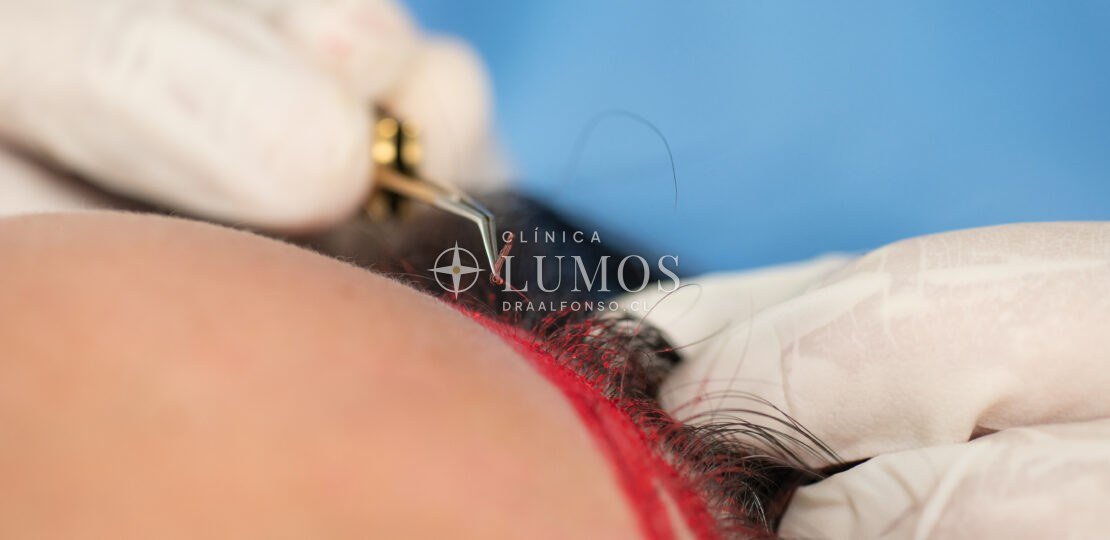

Hair transplant: what the immediate result looks like and what comes next
October 23, 2026 · By Dr. Evelyn Alfonso
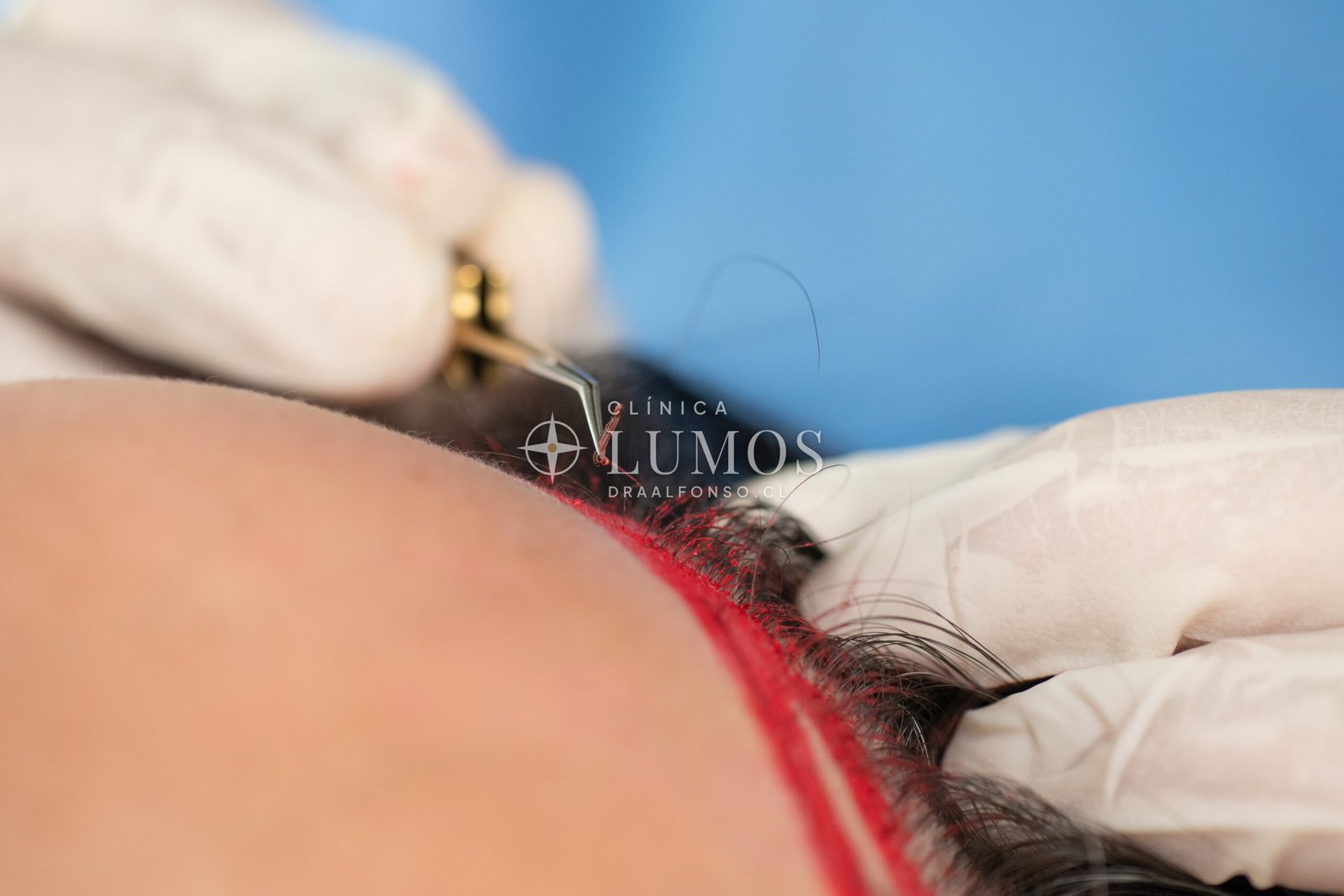
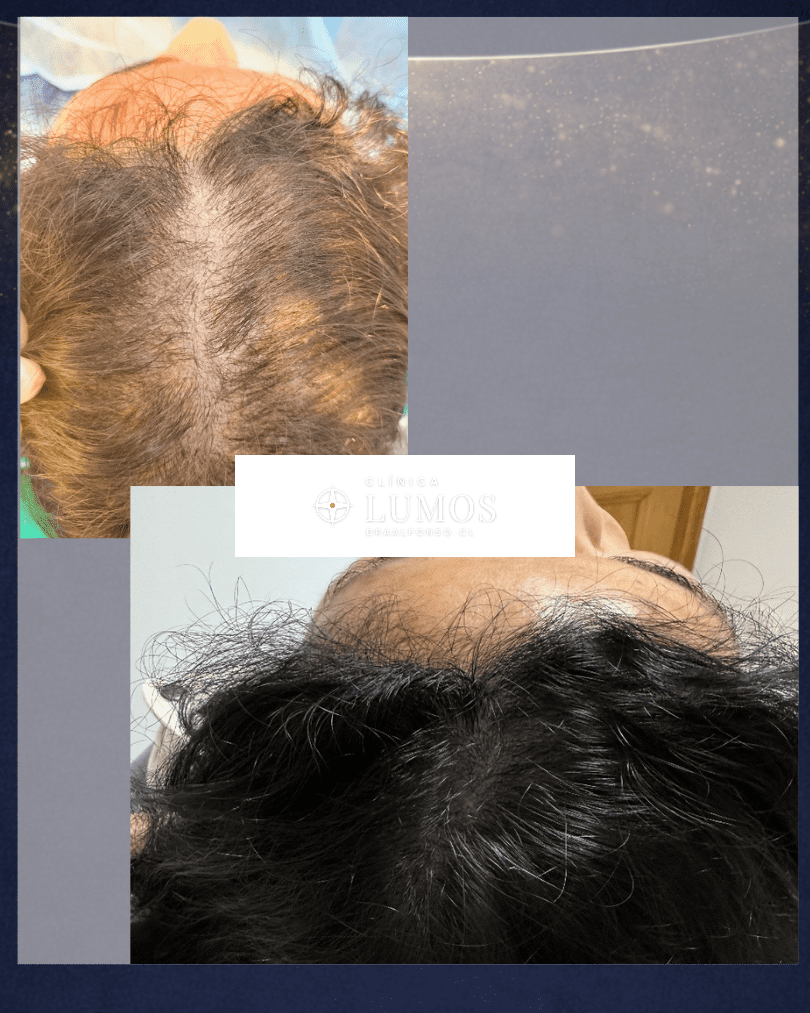
A change that begins on day one. In this case we performed a hair transplant with a personalized design to rebuild the frontal hairline and restore coverage of the top area.
Seeing a photo of a freshly operated patient usually triggers two reactions: amazement, because the frontal hairline already looks drawn in, and doubts, because it is not clear whether that is what will last. The short answer is that the immediate result shows the design and distribution of the follicles, but not the final result. In this article we explain what you are really seeing in a photo from transplant day, what happens to those follicles in the following months, and how to support the process to reach the best possible result.
The immediate result
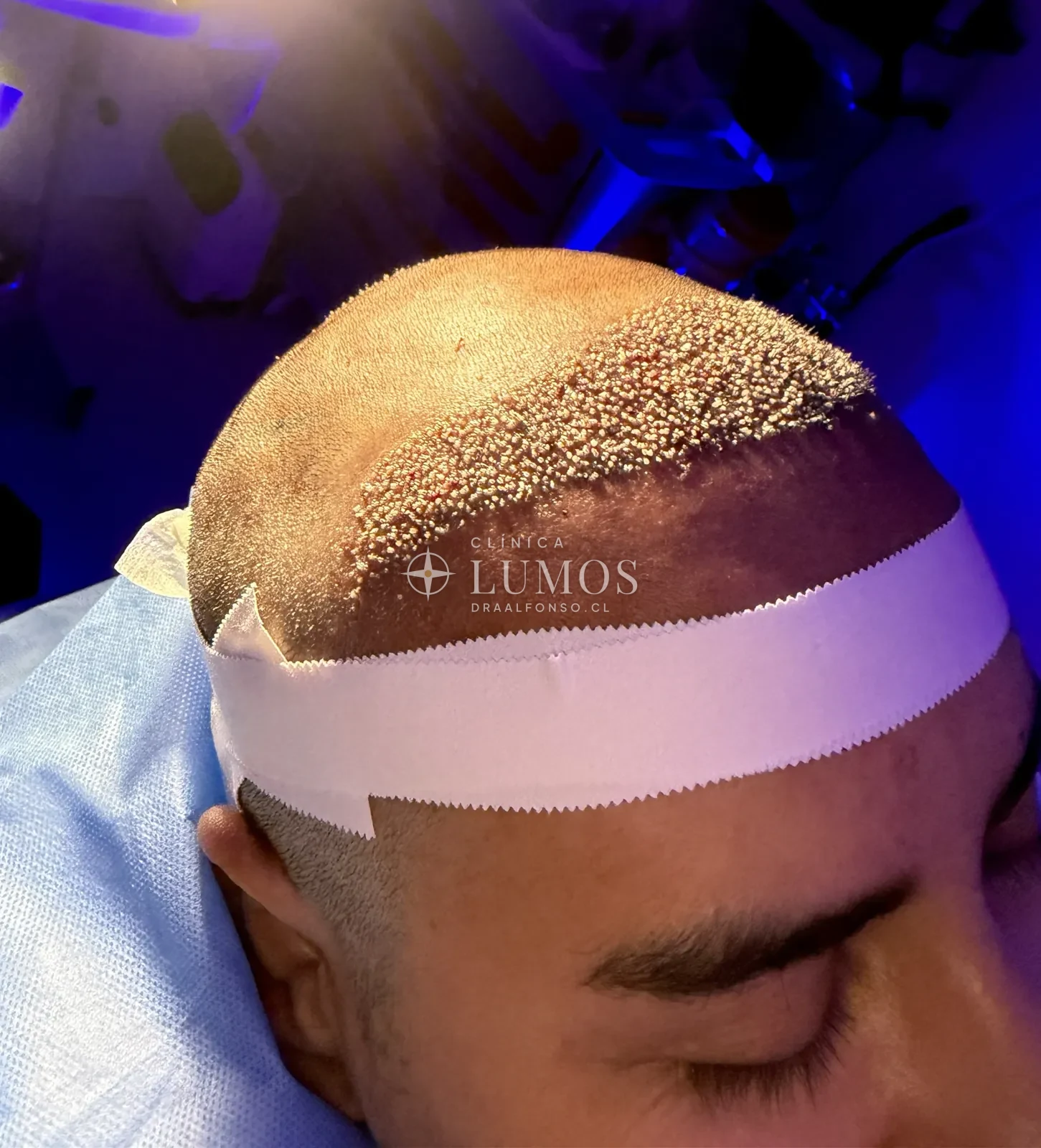
The second image shows the result at the end of the procedure: each follicular unit was strategically implanted, respecting the direction, distribution, and natural characteristics of the patient’s hair.
What you are seeing in a freshly operated photo
Immediately after the transplant, the implanted area shows small dots where each follicular unit was placed, sometimes with slight redness or tiny scabs forming. The hairs that stick out are short and belong to the newly implanted follicles. What that photo lets you evaluate is:
- The design: the shape of the frontal hairline, how it blends with the temples, and whether it respects the proportions of the face.
- The direction and angle: whether the hairs come out in the natural direction of each area, which is key so they can be styled later.
- The distribution: how the follicles were divided between the frontal hairline and the top area.
What that photo does not show is the final density, how thick the hair will be, or how it will look with the length and style you choose. That is built over time.
What is decided before day one
A well-achieved immediate result is no accident: it is the consequence of prior planning. At the evaluation, the type of alopecia is studied, the quality and capacity of the donor area are measured with the support of trichoscopy with artificial intelligence, and we talk about what you hope to achieve. With that information, we define how many follicles it is reasonable to extract, which areas they will go to, and what the frontal hairline will look like. On transplant day, that plan is reviewed with you in front of the mirror before starting, so that nothing is implanted without your approval.
Why the immediate result is not the final one
When a follicle is moved from the donor area to the recipient area, it goes through an adaptation period. It is common for the shaft of the implanted hair to fall out during the first few weeks, while the follicle, which is the structure that really matters, stays under the skin. The follicle then enters a resting phase and, as the months go by, produces new hair again. That is why many people feel they have “gone backward” a month after the transplant: it is an expected stage of the process.
This is just the beginning
The follicles go through normal stages of progression:
- First few days: small scabs that come off with washing. See how to wash your head after the transplant.
- Weeks 2 to 4: the implanted hair falls out; the follicle remains. Read does a hair implant fall out?
- From 3 to 4 months: progressive growth of the new hair.
- 10 to 12 months: the final result can be seen, and it may keep maturing for a few more months.
Every patient and every progression is different; final results require follow-up and time.
Month-by-month progression, in more detail
First week
This is the most delicate stage. There may be some swelling on the forehead and sensitivity in the donor area. The scabs soften with the prescribed washes. It is important not to scratch or pick them off.
First month
The scabs have already come off and the implanted hair starts to fall out. The appearance may resemble how it was before surgery, which sometimes causes anxiety. Shock loss may also appear, a temporary shedding of native hair near the treated area.
Months 2 and 3
This is the “waiting” stage. The follicles are resting, preparing for the new cycle. Some people notice small pimples, which are usually related to hairs trying to come out; if there are many or they are bothersome, it is a good idea to get them checked.
Months 4 to 8
Visible growth begins. At first the new hair is fine and may grow unevenly; over the weeks it gains thickness and coverage gradually improves.
Months 10 to 12 and beyond
The final result can be seen. In some cases, the hair keeps maturing in texture and thickness for a few more months. You can review the progression after a hair transplant in more detail.
Before any decision, remember that the most valuable thing about this photo is not the immediate effect, but what it reveals about the planning: a careful design today is the foundation of the result you will see a year from now.
What makes a result look natural
Naturalness does not depend on a single factor, but on several that are taken care of from the planning stage:
- A personalized design, tailored to your face, your age, and how your alopecia could evolve.
- An irregular, soft frontal hairline, like a natural one, with fine follicles at the edge.
- Respect for the direction of the hair in each area of the head.
- Smart distribution of the available follicles, because the donor area is limited.
- Care of the native hair, so the result does not end up isolated if the alopecia keeps progressing. A Hair Protocol can help with that goal.
At Clínica Lumos, Dr. Evelyn Alfonso personally evaluates each case and leads every procedure, which is performed in an operating room authorized by the SEREMI de Salud (regional health authority).
Tips to care for your result from day one
- Follow the instructions to the letter, especially those on washing and rest.
- Don’t touch or press the implanted area during the first few days.
- Protect yourself from the sun and avoid intense exercise until you are given the go-ahead.
- Avoid smoking and alcohol during recovery.
- Be patient with the mirror: compare yourself with photos taken in the same lighting and position, not day by day.
- Attend your follow-up visits and write down your questions: during treatment you have direct contact via WhatsApp.
How to track your progress without stressing
One of the best tools for going through the process calmly is keeping an orderly record. We recommend taking photos once a month, always in the same lighting, at the same distance, and in the same positions: from the front, from both sides, and from above. Do it with dry hair styled the same way. Avoid looking at yourself daily under strong lights, because any variation in lighting can make you think you are doing worse or better than you really are.
It also helps to remember that months 2 and 3 are, for many people, the most emotionally difficult: the implanted hair has already fallen out and the new hair cannot be seen yet. Knowing that this stage is expected, and having someone to ask, makes a big difference.
Myths about the immediate result
“If it looks good on day one, it is done”
Day one shows the design, not the final result. The implanted hair falls out and grows back in the following months.
“If the hair falls out after a month, the transplant failed”
That shedding is part of the expected process. The follicle remains and will produce hair again.
“The denser it looks right after surgery, the better”
Density must be planned according to your donor area and the design. What matters is that the final result looks natural and harmonious.
Signs to seek advice
Contact the team if you have increasing pain, widespread redness, discharge, fever, bleeding that will not stop, or numerous bothersome pimples. Also if, after the expected time, you do not notice growth: the doctor will evaluate your progress.
Frequently asked questions
When will it be noticeable that I had a transplant?
In the first few days, the scabs and some redness may be noticeable. After that, the appearance gradually returns to normal. The option of a transplant without shaving can help if you are looking for more discretion, depending on your case.
Can I get a haircut after the transplant?
Yes, but it is best to wait as long as the doctor tells you, especially before using clippers on the implanted area.
Does the new hair grow the same in all areas?
Not always at the same pace. It is normal for some areas to progress before others; that is why the result is evaluated as a whole between 10 and 12 months.
Does the immediate result tell you whether the design turned out well?
Yes, to a large extent. The shape of the frontal hairline, the direction of the hairs, and the overall distribution can be seen from day one. What changes over time is the visible density and the thickness of the hair, which are completed as the follicles grow back.
Will I need another session?
It depends on your alopecia, your goals, and how your native hair evolves. Some people add a session later on; others do not need it.
Where can I see final results?
You can see real patient results at different stages.
In summary
The immediate result of a transplant shows the design, direction, and distribution of the follicles, but it is only the beginning. The implanted hair falls out in the first few weeks, grows back from 3 to 4 months, and the final result can be seen between 10 and 12 months. Learn about FUE hair transplant in Viña del Mar and, if you want to know what it would be like in your case, book your evaluation.
Educational information. It does not replace a medical evaluation. Results vary from patient to patient.
Keep reading
Most read
RELATED POSTS
View all

Female hair transplant: a case one year after the procedure
October 23, 2026 | by Dra. Evelyn Alfonso
What really happens on the day of your hair transplant
October 23, 2026 | by Dra. Evelyn Alfonso
Comments (0)
No comments yet. Be the first to ask!