
LipoVaser, LipoLaser and micro-aspiration: how we combine the techniques
October 23, 2026 · By Dr. Evelyn Alfonso
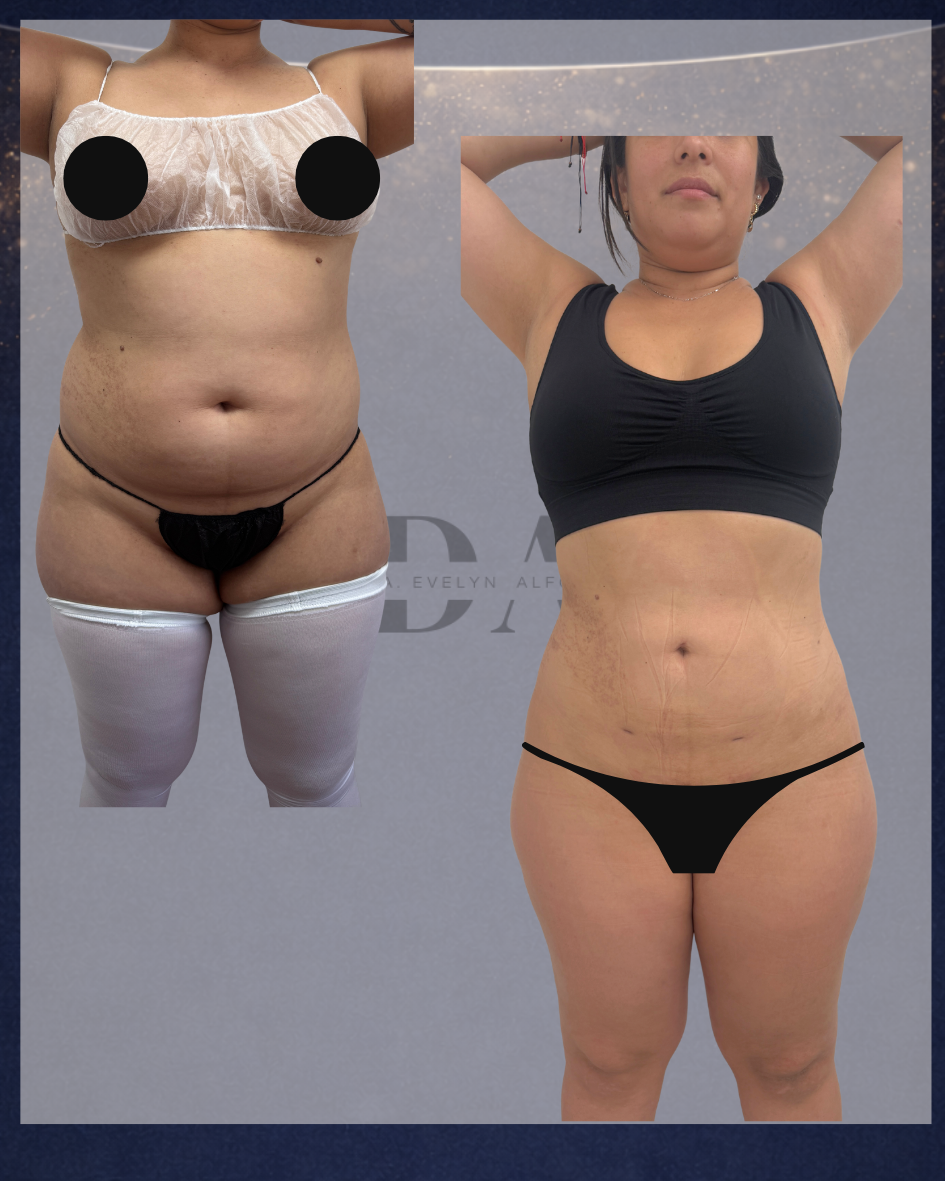
At Clínica Lumos we understand that every body is unique. That is why we combine medical experience with different technologies: laser, Vaser and assisted micro-aspiration.
If you are researching liposuction, you have probably come across many names: LipoVaser, LipoLaser, assisted lipo, Lipo Full Tech… It is easy to get confused. In this article we explain in simple terms what each technology does, why they are sometimes combined, what the process is like and which questions are worth asking before deciding. No technology is magic on its own: what matters most is a proper indication and the experience of the person using it.
What each technology contributes
- Vaser: uses ultrasound to emulsify fat before suctioning it, aiming for less tissue trauma.
- Laser: complements the procedure with laser energy.
- Assisted micro-aspiration: allows fat to be removed with greater precision, especially in small areas.
Vaser: ultrasound to “soften” the fat
In traditional liposuction, fat is removed mainly through the mechanical movement of the cannula. With VASER, before suctioning, ultrasound energy is applied through a thin probe. That energy acts selectively on fatty tissue and emulsifies it, that is, makes it more fluid, which makes it easier to remove. The idea is for the extraction to be more controlled and gentler on the structures surrounding the fat. If you want to learn more, read LipoVaser vs. traditional liposuction.
Laser: energy as a complement
The laser delivers thermal energy to the tissue. It is used as a complement within the plan, for example when, in addition to removing fat, the aim is to work on the skin’s response. Its use, the area and the intensity are decided case by case.
Assisted micro-aspiration: precision in the details
It is a system that assists the movement of the cannula, which helps remove fat more finely and evenly. It is especially useful for detail work, in small areas or for refining transitions between areas, which is where you notice the difference between a “flat” contour and a harmonious one.
A simple way to understand it
Think of liposuction as a sculpting job in three stages. First, the material is prepared: ultrasound emulsifies the fat so it is easier to remove. Then it is removed carefully: the cannula, assisted by micro-aspiration, removes the fat evenly. And finally, the details and the tissue response are worked on, where the laser can complement the work. Each step has a purpose, and the surgeon’s experience determines when and how to use each tool.
This also explains why two procedures with the same name can be very different: what changes the result is how it is planned and carried out on your body.
What we aim for
- Greater precision in fat removal.
- Care for the tissues.
- A more comfortable recovery.
- Natural, harmonious results.
Behind these goals is a simple idea: liposuction is not about removing as much fat as possible, but about sculpting. A natural contour respects your proportions, keeps smooth transitions between areas and avoids irregularities. That is why technique matters as much as planning.
Lipo Full Tech: VASER + MicroAire + Laser
When we combine all three technologies we call it Lipo Full Tech: we aim for precise fat removal, greater skin retraction and a more harmonious silhouette, always planning each procedure in a personalized way.
Why combine them?
Each technology contributes something different at a different moment of the procedure: ultrasound prepares the fat, micro-aspiration helps remove it precisely and the laser complements the work. Combining them makes it possible to tailor the surgery to what your body needs, instead of applying the same recipe to everyone. Not everyone needs all three; sometimes one or two are enough.
A combination for every case
Dr. Evelyn Alfonso, trained in Barcelona (EIMEC) in these technologies, evaluates your case and defines the most suitable combination. For very small areas there is also Mela Lipo. Learn about liposuction with LipoVaser and LipoLaser and the areas that can be treated.
What is considered when choosing
- The area to be treated: working on the abdomen and flanks is not the same as working on the arms, double chin or a small area.
- The amount and type of fat: some fat is softer and some is more fibrous, and they behave differently.
- Skin quality: its elasticity influences how it will adapt to the new contour.
- Your medical history: previous surgeries, health conditions and medications.
- Your goals: what you want to change and what is realistic to achieve in your case.
Who can be a good candidate?
In general, these techniques are intended for people with localized fat that does not respond to diet or exercise, with a relatively stable weight and in good health. Some signs that you could be a candidate:
- You have specific areas, such as the abdomen, flanks, back or arms, that do not change even though you watch your diet and work out.
- Your weight has been stable recently.
- You want to improve your contour, not lose weight.
- You have realistic expectations and are willing to follow the post-operative care.
On the other hand, it is best to wait or consider other alternatives if you are in the middle of losing weight, if you have an uncontrolled health condition or if the main problem is a significant excess of skin. All of this is discussed honestly at the evaluation. If you are interested in a particular area, see for example flank and waist results or arm liposuction.
What the process is like, step by step
1. Evaluation
Dr. Alfonso evaluates you personally, reviews the areas, your skin and your medical history, and explains which technologies she recommends and why.
2. Preparation
Pre-operative tests are requested, which you can have done at the clinic itself, and you receive instructions on diet, medications and smoking. You may find how to prepare for liposuction and why you should quit smoking before surgery helpful.
3. Procedure
It is performed in an operating room authorized by the SEREMI de Salud (Chile’s regional health authority), and Dr. Alfonso leads every surgery following the plan defined for you.
4. Post-op
During the first few days there is swelling and discomfort. The compression garment and lymphatic drainage are prescribed case by case, and you have direct contact via WhatsApp throughout your treatment. More details in liposuction aftercare: compression garment and lymphatic drainage and LipoVaser recovery week by week.
5. Results
The contour becomes more defined as the swelling goes down, and the final result takes months. See when LipoVaser results become visible.
Practical tips before and after
- Arrive at a stable weight and without extreme diets. You will find ideas in diet before and after liposuction.
- Tell us everything at your evaluation: medications, supplements, previous surgeries and habits. That information is part of your safety.
- Plan your first few days: comfortable clothes, someone to keep you company and time to rest.
- Walk gently from the start, as instructed, to promote circulation.
- Take follow-up photos in the same lighting and position; day-to-day change is hard to notice in the mirror.
- Keep up your habits afterwards: the fat cells removed do not come back, but the remaining ones can grow if you gain weight.
What to ask at your evaluation
- Which technologies do you recommend, and what does each one contribute in my case?
- What change is realistic to expect in my contour and my skin?
- How much time should I set aside for recovery, and when can I go back to work and exercise?
- What care will I need afterwards, and how do I contact the team if I have questions?
Myths about technology-assisted liposuction
“With more technology, the result is guaranteed”
Technology is a tool. The result depends on a proper indication, planning, the surgeon’s technique and your recovery. No machine replaces medical judgment.
“The laser melts the fat, so there is no need to suction”
In these procedures, fat is removed by suction; the laser and ultrasound are complements that act before or during that process.
“If it uses technology, it is not surgery”
It is still surgery, with its care, risks and recovery. That is why it is performed in an operating room and after a prior evaluation.
“It is for losing weight”
No. Liposuction treats localized fat to improve the contour. Read liposuction and weight loss: myths and facts.
Warning signs after the procedure
Contact your medical team immediately, or go to the emergency room if it is serious, if you have:
- Fever.
- Severe pain that does not ease with the instructions given.
- Shortness of breath or chest pain.
- Pain or swelling in a calf.
- Spreading redness, discharge or a bad smell at the incisions.
Frequently asked questions
Are LipoVaser and LipoLaser the same thing?
No. VASER uses ultrasound to emulsify fat, and the laser provides thermal energy as a complement. They can be used separately or combined.
Do I need all three technologies?
Not necessarily. The combination is defined at the evaluation according to your areas, your fat, your skin and your goals.
Is recovery faster with these technologies?
The aim is a more comfortable recovery, but every person progresses differently, and it also depends on the extent of the procedure and the aftercare.
What is Mela Lipo?
It is an alternative for very small areas. You can learn about it at Mela Lipo and discuss at the evaluation whether it suits your case.
Does the skin always retract?
Skin retraction is a goal, not a guarantee. It depends a lot on the quality of your skin, your age and your history. The doctor will tell you what is realistic in your case.
In summary
VASER, laser and assisted micro-aspiration are tools that, when well combined, aim for more precise fat removal, care for the tissues and a natural contour. The key is the evaluation: understanding your body and choosing the right combination for you. If you want to know what your plan would be, book your evaluation with Dr. Evelyn Alfonso at Clínica Lumos, Viña del Mar.
Educational information. It does not replace a medical evaluation. Results vary from patient to patient.
Comments (0)
No comments yet. Be the first to ask!