
LipoVaser results: when you see them and how to maintain them
October 22, 2026 · By Dr. Evelyn Alfonso
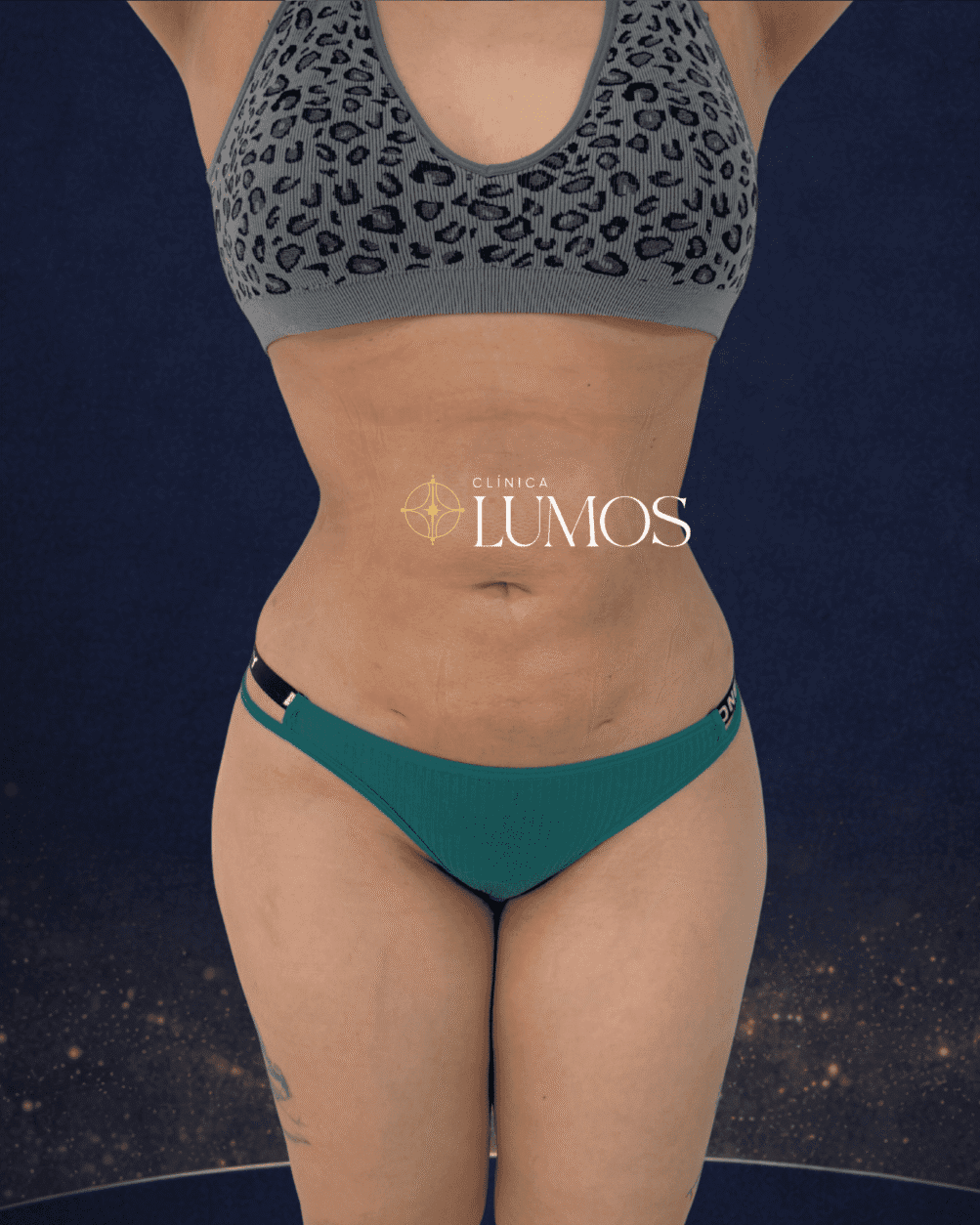
After LipoVaser liposuction, it is natural to want to see the change right away. But the body needs time to reduce swelling and adapt. These are the usual timeframes; every patient progresses at their own pace.
Knowing what to expect at each stage helps you go through recovery more calmly. In the first few weeks, questions often come up such as “why do I look the same or more swollen than before?” or “is this normal?”. In this article we explain why the result is not immediate, how it evolves month by month, what affects the timing, how to take care of what you have achieved and which signs require medical advice.
Why the result is not visible right away
In LipoVaser liposuction, ultrasound is used to emulsify fat before suctioning it. Although the fat is removed during the procedure, the tissues in the treated area react with inflammation: more fluid arrives, swelling appears and sometimes bruising. That swelling takes up volume and “hides” the new contour for a while.
In addition, the skin needs to adapt to the new shape. That process of retraction and settling is gradual and takes months. That is why the day after surgery is not the time to assess the result: it is just the beginning.
An approximate timeline
To give you a general idea before going into detail: first comes a stage where swelling predominates, then a period in which the change gradually becomes visible, and finally the stage in which the skin finishes adapting and the definitive result can be seen. The exact dates vary from person to person.
The first few weeks: swelling
During the first few weeks the treated area is swollen and there may be bruising. That is why the contour does not yet reflect the real result. The compression garment and the prescribed care help control the swelling.
What is normal at this stage
- Swelling that can vary from day to day or increase at the end of the day.
- Bruises that change color as they are reabsorbed.
- Tenderness to the touch or areas with reduced sensation.
- A feeling of tightness or hardened areas.
- Tiredness, especially in the first few days.
At this stage the most important thing is to follow the instructions: compression garment, lymphatic drainage when prescribed, gentle walking and rest. You can read more in liposuction aftercare: compression garment and lymphatic drainage and in LipoVaser recovery week by week.
Between the first and third month
As the swelling goes down, the new contour becomes increasingly evident. Many people notice that their clothes fit differently during this period.
It is a motivating stage, but it is still not the final result. There may be residual swelling, especially in lower-lying areas or at the end of the day, and some areas may still feel firm. It is normal for progress not to be perfectly linear: there will be days when you look better and others when you notice more swelling.
Between the third and sixth month: final result
In general, the definitive result is seen between 3 and 6 months, when the residual swelling disappears and the skin finishes adapting to the new contour.
This is the moment when you can really assess the change. If you took photos before and during the process, comparing them now will clearly show you the difference.
What affects the timing
The timeframes above are approximate. Every person progresses at their own pace, and there are factors that can make the process faster or slower:
- The areas treated and the extent of the procedure: treating several areas usually involves more swelling than a single small area. See which areas can be treated.
- Skin quality: skin with good elasticity usually adapts better and faster.
- Following the instructions: compression garment, drainage when prescribed, follow-up visits and relative rest.
- Your habits: hydration, diet and not smoking influence tissue recovery.
- Your own body: some people simply take longer for the swelling to go down, and that does not mean anything is wrong.
How to maintain your results
- Keep a stable weight. The fat cells removed do not come back, but the remaining ones can grow if you gain weight.
- Exercise regularly, once the medical team gives you the go-ahead.
- Eat a balanced diet and stay well hydrated.
- Attend your follow-up visits and follow the post-operative instructions, such as wearing the compression garment or the drainage sessions you are prescribed.
For specific ideas on diet, read diet before and after liposuction. And if you smoke, see why you should quit smoking before surgery: smoking affects tissue oxygenation and healing.
Follow-up photos
Comparing yourself with photos taken before and at each follow-up visit helps you assess the real change, which can go unnoticed day to day.
How to take good photos of your progress
- Always use the same lighting, ideally even, natural light.
- Stand in the same position and at the same distance from the camera.
- Take photos from the front, side and back.
- Wear similar clothing or simple underwear, so the contour looks the same.
- Take them at the same time of day, because swelling can vary between morning and night.
Looking in the mirror every day can be misleading: the change is gradual and the eye gets used to it. Photos, on the other hand, show progress more objectively.
Your mood while you wait
Recovery is not only physical. It is quite common to feel anxiety, impatience or even disappointment in the first few weeks, when swelling hides the change you were expecting. Knowing that this happens to many people helps you go through it more calmly.
- Avoid comparing yourself with other people: every body and every procedure has different timeframes.
- Do not evaluate yourself every day: take a careful look at specific moments, using your follow-up photos.
- Focus on what is up to you: following your care plan, resting, eating well and moving as instructed.
- Ask your questions: resolving a concern early usually brings a lot of peace of mind.
What to expect at your follow-up visits
Post-operative follow-up visits make it possible to check how the treated area is progressing, how the skin is doing and whether the prescribed care is working. Instructions can be adjusted during them, such as the use of the compression garment or drainage sessions, according to your progress. They are also a good time to compare your photos and talk about how you feel. Bring your questions written down and tell the team about any change that caught your attention, even if it seems minor.
Remember that attending your follow-up visits is part of the treatment: even if you feel well, they help the result evolve in the best possible way.
Myths about liposuction results
“If I do not see the change at one month, the surgery did not work”
At one month there is still swelling. The definitive result is generally seen between 3 and 6 months.
“Lipo will make me lose several kilos”
Liposuction improves the contour in areas of localized fat; it is not a weight-loss method. The change is more noticeable in your shape and in how your clothes fit than on the scale. Read liposuction myths and facts.
“The result is permanent, no matter what I do”
The cells removed do not come back, but if you gain weight, fat can accumulate in the remaining cells. Your habits are part of the result.
“If I am more swollen one day, something went wrong”
Swelling goes up and down during recovery. What matters is the overall trend. If you have questions, ask your team.
Warning signs: when to seek medical advice
Contact your medical team immediately, or go to the emergency room if it is serious, if you notice:
- Fever.
- Severe pain that does not ease with the instructions given.
- Shortness of breath or chest pain.
- Pain, swelling or warmth in a calf.
- An area that swells quickly and becomes tight or very painful.
- Spreading redness, foul-smelling discharge or wounds that open.
At Clínica Lumos you have direct contact via WhatsApp during your treatment, so do not hesitate to write if something worries you.
Frequently asked questions
When will I notice the change in my clothes?
Many people notice it between the first and third month, as the swelling goes down.
Why do I look more swollen than before surgery?
In the first few weeks, swelling can take up volume and even make the area look bigger. It is part of the process and gradually decreases.
Are LipoVaser results faster than traditional lipo?
Every person progresses at their own pace, and it depends on several factors. You can learn about the differences in LipoVaser vs. traditional liposuction.
Can I speed up the reduction of swelling?
What helps most is following the instructions: compression garment, drainage when appropriate, gentle walking, staying hydrated and eating well. Do not use products or treatments on your own without asking first.
When can I go back to working out?
Gradually and once the medical team clears you, based on your progress.
In summary
The results of LipoVaser liposuction take time to build: in the first few weeks swelling predominates, between the first and third month the contour becomes more evident, and the definitive result is generally seen between 3 and 6 months. Patience, good care and stable habits are your best allies. If you are considering the procedure, see which areas can be treated and liposuction myths and facts. At Clínica Lumos, Dr. Evelyn Alfonso personally evaluates your case and leads every procedure in an operating room authorized by the SEREMI de Salud (Chile’s regional health authority).
This information is educational and does not replace a medical evaluation. Results vary from patient to patient.
Comments (0)
No comments yet. Be the first to ask!