

Blog
Artículos de la Dra. Evelyn Alfonso sobre trasplante capilar, LipoVaser y medicina estética en Viña del Mar.
Most read

Trichological evaluation: what tests we do before a hair transplant
October 16, 2026 | by Dra. Evelyn Alfonso

LipoVaser Recovery: What to Expect Week by Week
October 16, 2026 | by Dra. Evelyn Alfonso
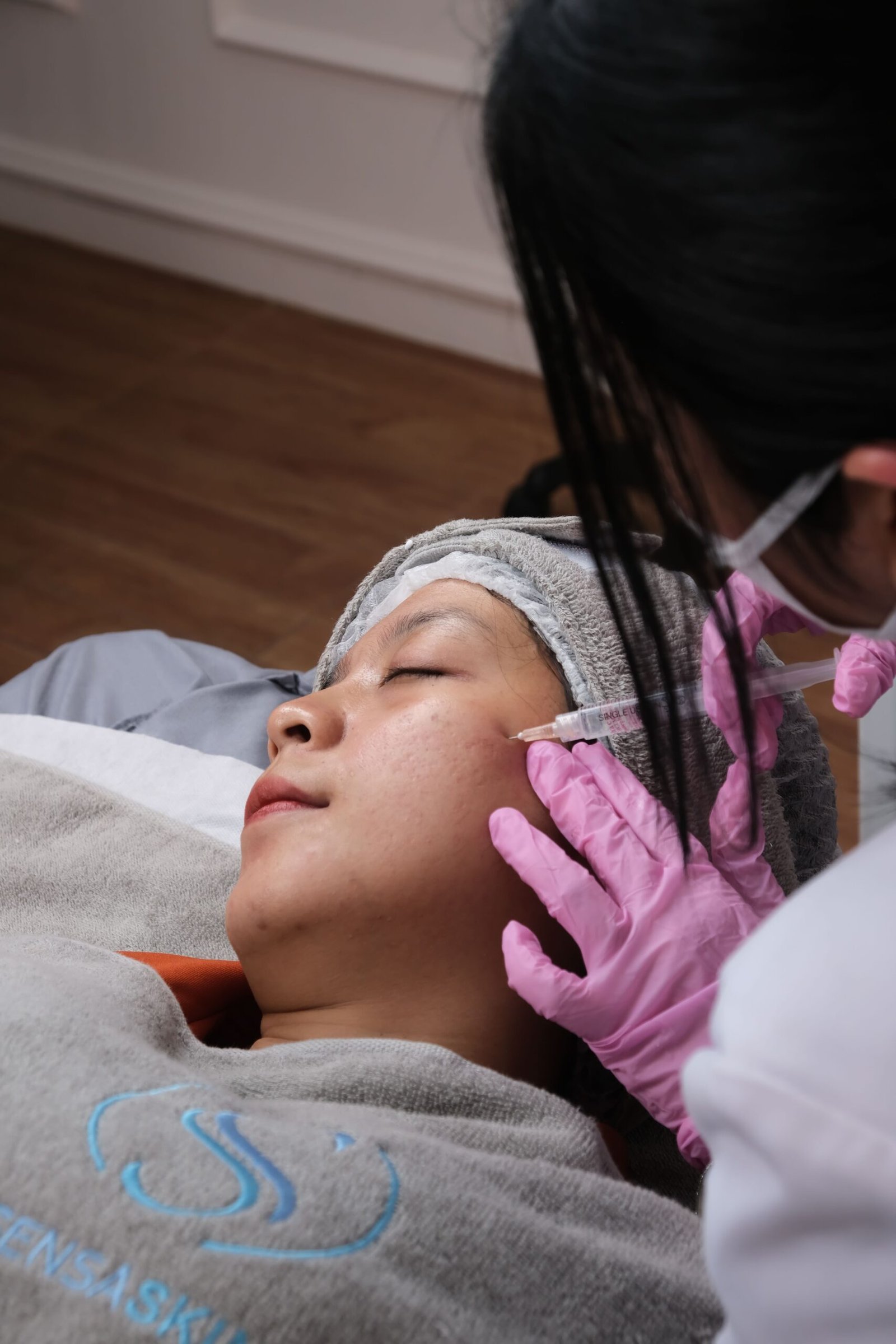
Facial and Body Mesotherapy: What It Is, What It Is For and What Results to Expect
October 16, 2026 | by Dra. Evelyn Alfonso
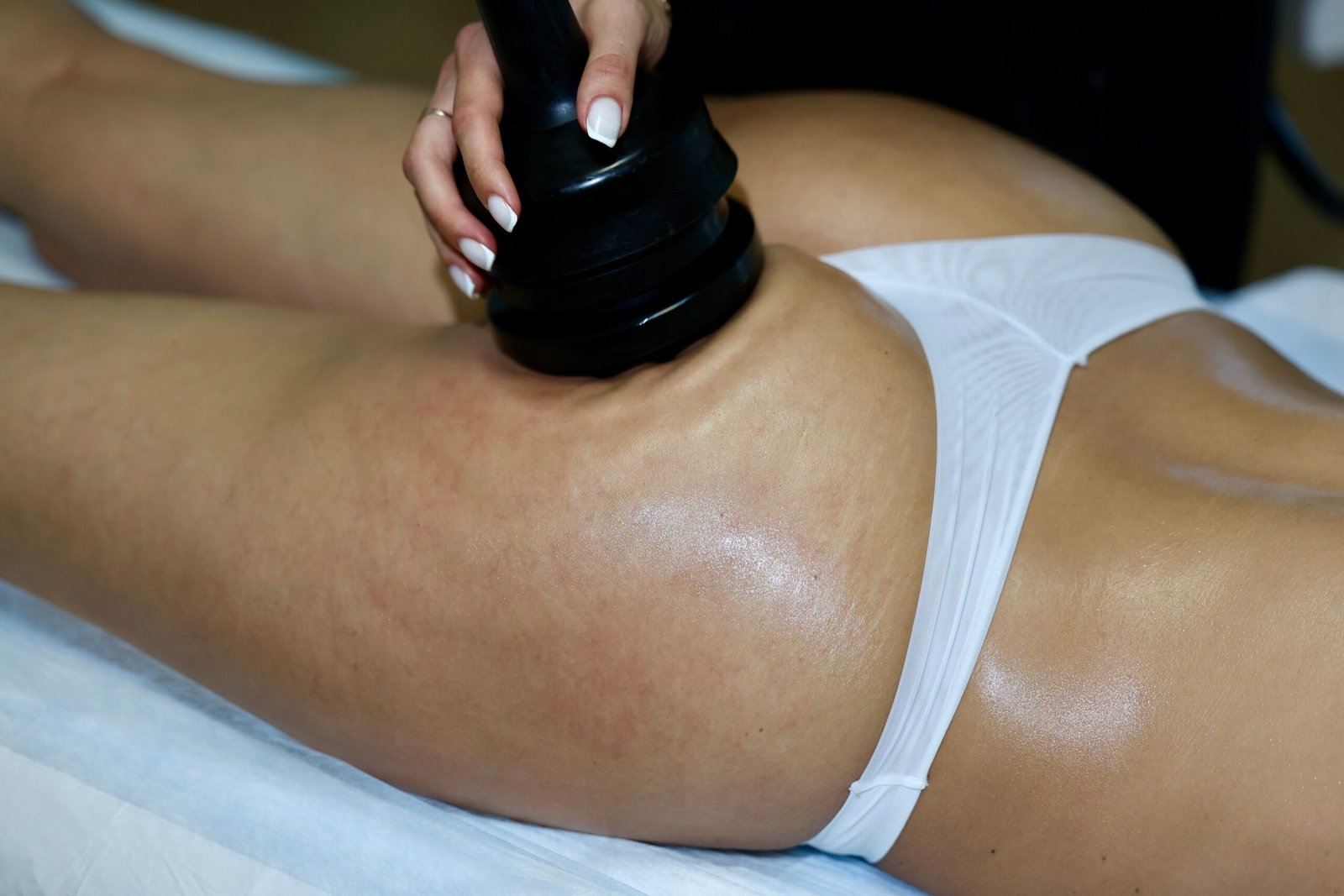
Mesotherapy for Cellulite and Localized Fat: How It Works
October 16, 2026 | by Dra. Evelyn Alfonso

Am I a candidate for a hair transplant? Signs, age and realistic expectations
October 16, 2026 | by Dra. Evelyn Alfonso


Am I a candidate for a hair transplant? Signs, age and realistic expectations
October 16, 2026 · By Dr. Evelyn Alfonso
“Can I get a transplant yet?” is one of the first questions we hear in consultations. There is no single answer, but there are clear criteria that help evaluate it seriously, instead of deciding out of anxiety or by comparing yourself with other people’s cases.
- Dr. Alfonso evaluates you personally
- WhatsApp reply in under 1 hour
- 5.0 on Google · 33 reviews
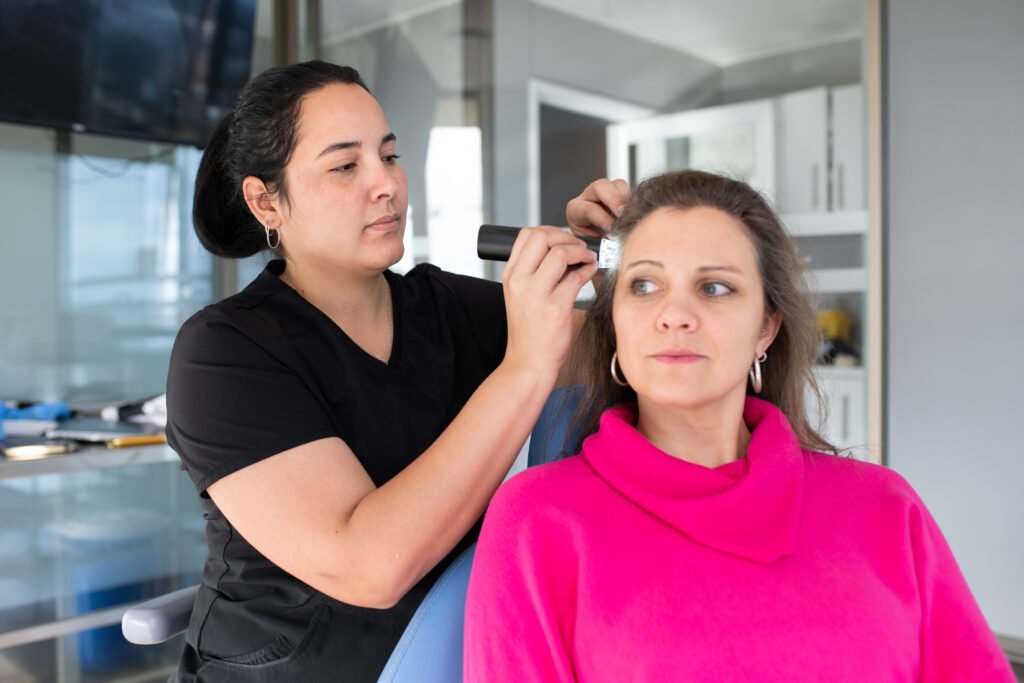
Being a good candidate does not depend only on “having little hair”. It depends on why it is falling out, how much healthy hair you have to redistribute, how your alopecia could progress over the next few years and your general health. Below we explain each of these criteria, what is reviewed in the evaluation and what options exist if now is not yet the right time.
A clear diagnosis of alopecia
Before thinking about a transplant, it is key to confirm the type and grade of alopecia; the most common is androgenetic alopecia. Not all hair loss is treated the same way, and some conditions require medical management before surgery, or instead of it.
Androgenetic alopecia is the one that responds best to a transplant, because the hair at the back and sides of the head is usually resistant to the hormonal effect that causes it. On the other hand, with active alopecia areata, telogen effluvium or active scarring alopecia, surgery is not the right choice. You can check the differences in types of alopecia.
The grade also matters. Early-stage alopecia is sometimes better managed with medical treatment, and very extensive alopecia may require a staged plan or a more limited goal, for example prioritizing the front area, which is what most defines the face. If your hair loss is concentrated at the top back of the head, you may be interested in hair loss at the crown.
A dense, stable donor area
A transplant redistributes your own follicles, usually taken from the back and sides of the scalp. Having a dense, stable donor area is a central technical requirement for a good result.
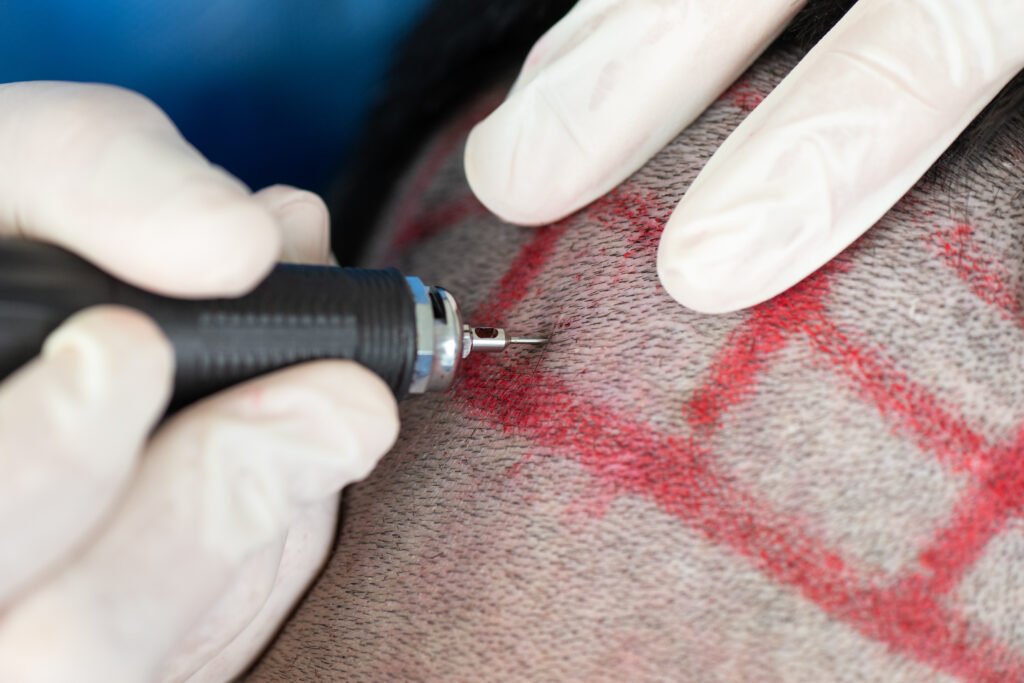
The evaluation looks at how many follicular units there are per area, how many hairs each one has, hair thickness and whether there is miniaturization in the donor area as well. Thick hair covers more than fine hair, and a scalp with good density allows grafts to be extracted without the area looking thinned out. For this analysis, Clínica Lumos uses AI-assisted trichoscopy.
Because the donor area is limited, planning must consider not only what you need today, but what you might need later on if the alopecia keeps progressing.
Age matters, but it is not a fixed number
In very young patients, 20 to 22 years old, it is often best to first watch how the alopecia progresses and consider medical treatment before defining a surgical plan, since the hair loss may keep evolving. There is no universal upper limit: what matters is the current condition of your scalp and your general health.
The risk of having surgery too early is designing a hairline for the present that, years later, ends up isolated if the surrounding hair keeps falling out. That is why, in young people, the design should be conservative and accompanied by a plan to care for the native hair. We go into this in at what age to get a hair transplant.
Realistic expectations
A hair transplant provides greater density and a more balanced appearance, but it does not bring back the hair you had in your youth or stop alopecia in the native follicles that were not transplanted. Being clear about this from the start avoids frustration.
It is also important to understand the timing: the implanted hair usually falls out temporarily in the first few weeks and the result appears over the months. We explain it in progress after a hair transplant and in does a hair transplant give immediate results?. A good candidate is also someone willing to wait through that process and follow the care instructions.
General health compatible with outpatient surgery
As with any surgical procedure, a general health evaluation is required before scheduling the procedure.
This includes reviewing chronic illnesses, regular medications, allergies, healing history and habits such as smoking, which can affect healing and tissue oxygenation (more information in smoking before surgery). Pre-operative tests can be done at the clinic itself, and the procedure is performed in an operating room authorized by the SEREMI de Salud (regional health authority).
Other factors that influence the result
In addition to the main criteria, there are hair and skin characteristics that change how far a transplant “goes” and that are taken into account when planning:
- Hair thickness: thick hair gives more of a sense of coverage than fine hair with the same number of grafts.
- Hair shape: wavy or curly hair tends to cover more surface than very straight hair.
- Contrast between hair and skin: when hair and skin color are similar, the sense of density is usually greater; when the contrast is high, any gap is more noticeable.
- Size of the area to be covered: the larger the area, the more important it is to prioritize and distribute the available grafts well.
- Commitment to aftercare: following the instructions for the first few weeks and attending follow-up visits is part of the result.
None of these factors alone determines whether or not you are a candidate, but they help adjust expectations and the design to your particular case.
What the evaluation looks like, step by step
- Initial conversation: Dr. Evelyn Alfonso evaluates you personally and learns about your history, when you started noticing the hair loss, your family history and what treatments you have tried.
- Scalp examination: the affected area and the donor area are analyzed, with the help of trichoscopy.
- Diagnosis: the type and grade of alopecia are determined, along with any other factors to consider.
- Plan: if you are a candidate, the design, the approximate number of grafts and the aftercare are discussed; if not, the most suitable path is proposed.
- Tests: if you move forward with surgery, pre-operative tests are ordered.
Details on the tests are in trichological evaluation: what tests we perform.
Signs that it may not be the right time
- The hair loss is recent, sudden and diffuse, and could be temporary effluvium.
- You have bald patches that appeared suddenly.
- There is itching, pain, redness or scabs on the scalp.
- Your donor area also shows fine hair or low density.
- You expect to get back exactly the hair you had many years ago.
None of this means you will never be able to have surgery: it means it is best to study the case further or treat another condition first.
What if I am not a surgical candidate yet?
There are non-surgical hair protocols, based on follicular nutrition and scalp stimulation, designed precisely for the stages before a transplant or to boost post-operative results.
At Clínica Lumos we work with the Hair Protocol, which is recommended based on each patient’s diagnosis. There are also medical treatments that must be prescribed and monitored by a doctor. If you are interested, see how to improve hair density without a transplant.
Myths about who can get a transplant
“If I am very bald, there is nothing that can be done”
Not necessarily. It mainly depends on the donor area. Sometimes a partial goal can be set that greatly improves the appearance of the face, even if the entire surface is not covered.
“Women cannot get a transplant”
Some women are candidates, depending on the type of alopecia and their donor area. It requires a careful evaluation to rule out other causes of hair loss. More information in female alopecia.
“The sooner I have surgery, the better”
Not always. Having surgery too early, without knowing how the alopecia will progress, can lead to a design that later does not keep up with the natural progression of hair loss.
Questions worth asking at your consultation
An evaluation is also your opportunity to fully understand the plan. Some useful questions:
- What type of alopecia do I have and how could it progress?
- What is my donor area like and how many grafts would be reasonable to use?
- Which area should be prioritized in my case and why?
- What should I do to care for my native hair after the transplant?
- Who performs the procedure and what will the follow-up be like?
- Who do I contact if I have questions after surgery?
At Clínica Lumos, Dr. Evelyn Alfonso, trained in FUE in Turkey, Italy and Barcelona, leads every procedure, and during treatment you have direct contact via WhatsApp to answer your questions. If you are coming from another city, the clinic is in Viña del Mar, about 1 hour 30 minutes from Santiago.
Frequently asked questions
Can I find out if I am a candidate from a photo?
A photo serves as an initial reference, but it does not replace an in-person evaluation. Density, hair thickness and miniaturization can only be properly seen with a scalp examination.
Is there a minimum age for a transplant?
There is no fixed number. In very young people it is usually best to first observe the progression and consider medical treatment. What matters is the condition of your scalp and how it could progress.
Do I need to stop using treatments before the evaluation?
Do not stop any treatment on your own. Bring a written list to the consultation and the doctor will tell you what to do based on your case.
Can I get a transplant if I have had surgery before?
It depends on the condition of your donor area and the previous result. It is evaluated case by case; we explain it in repairing a hair transplant done at another clinic.
What happens if I am not a candidate today?
An alternative plan is proposed, which may include medical treatment or the Hair Protocol, along with follow-up to review later whether a transplant becomes an option.
In summary
The only way to know if you are a candidate is with a real evaluation of your scalp, not with a reference photo. The main criteria are a clear diagnosis, a dense and stable donor area, alopecia whose progression can be anticipated, realistic expectations and general health compatible with outpatient surgery. Learn about FUE hair transplant in Viña del Mar and see real results. Book your appointment with Dr. Alfonso at Clínica Lumos and let us discuss which plan makes sense for your case: book your evaluation.
Note: eligibility and results are determined individually during the medical evaluation.